From Passive Holder to Active Device
As detailed in Trend 2 of our comprehensive 2026 Lanyard Trend Report, the most significant shift in lanyard technology is its transformation from a passive credential holder into an active data and experience hub. This guide explores the core technologies—NFC, RFID, and QR Codes—that are creating new opportunities for engagement, data collection, and security.
Deep Dive: NFC (Near Field Communication)
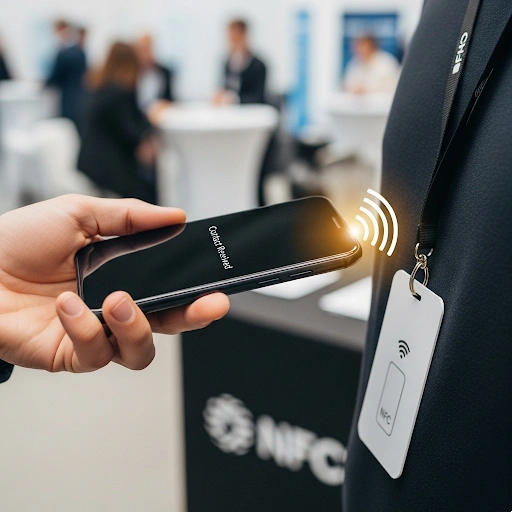
NFC is a short-range wireless technology that allows for simple, intuitive interactions with a simple tap. An NFC chip can be embedded into a PVC card, a custom lanyard attachment, or even a woven patch on the lanyard itself.
- The Brand Story: Modern, seamless, tech-savvy. Perfect for tech conferences, networking events, and cashless festivals.
- Key Applications: Contactless lead capture (tapping phones to exchange info), cashless payments for food and merchandise, and triggering interactive content on attendee smartphones.
- Why it's the Future: It's incredibly user-friendly (no app required) and already built into virtually every modern smartphone.
Deep Dive: RFID (Radio-Frequency Identification)
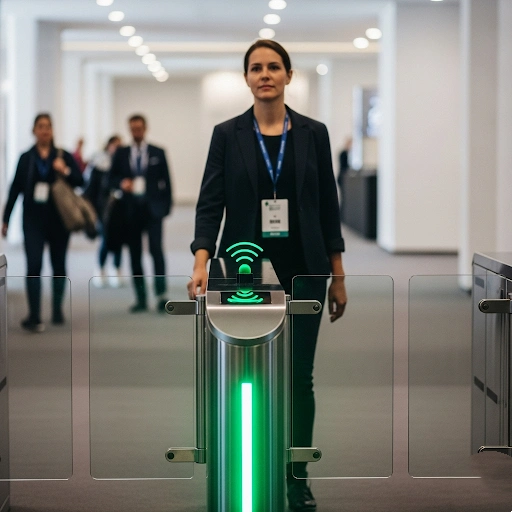
RFID uses radio waves to read information from a tag at a distance. Unlike NFC, it doesn't require a close tap, making it ideal for tracking and access control over a wider area.
- The Brand Story: Secure, efficient, data-driven. A must-have for large-scale conferences, trade shows, and events with tiered access levels.
- Key Applications: Frictionless access control (attendees walk through gates without stopping), session tracking (understanding which talks are most popular), and crowd flow management.
- Why it's a Game-Changer: Provides event organizers with invaluable, real-time data to measure ROI and improve future events.
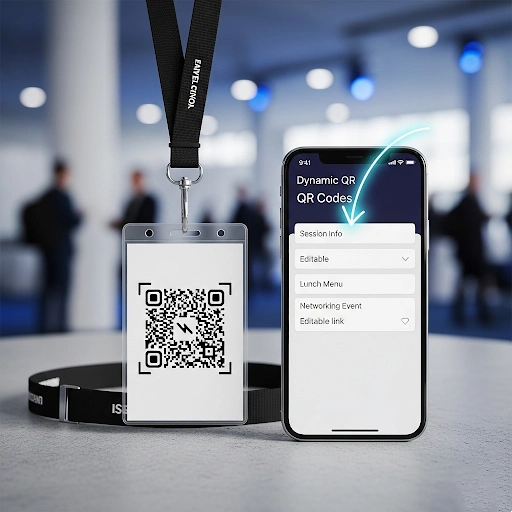
Deep Dive: The Evolved QR Code
The QR code is no longer just a link to a website. By 2026, the standard will be dynamic QR codes, which can be updated in real-time even after the lanyards have been printed with a high-quality printing technique.
- The Brand Story: Agile, engaging, personalized. Perfect for multi-day events with changing schedules or interactive elements.
- Key Applications: Linking to daily updated schedules, gamification (scavenger hunts), live polls and Q&A sessions, and personalized welcome messages.
- Why it's Essential: It offers incredible flexibility, allowing planners to adapt the attendee experience on the fly without reprinting materials.
Frequently Asked Questions
Think of it as Tap vs. Scan. NFC requires a close, intentional tap (a few centimeters), making it perfect for secure actions like payments or data exchange. RFID can be read from a greater distance (several meters), making it ideal for passive actions like access control and crowd tracking.
No, and that's the magic of it. Almost all modern smartphones have NFC readers built-in. When a user taps their phone on an NFC tag, it automatically triggers an action (like opening a webpage or saving a contact) without needing a pre-installed app.
Security is paramount. All data is encrypted. NFC's short range is an inherent security feature, preventing accidental reads. For RFID, systems use secure protocols and data is anonymized for tracking purposes, ensuring compliance with privacy regulations like GDPR.
Yes. The technology is flexible. NFC/RFID chips can be embedded in PVC cards, custom rubber or metal attachments, or even woven directly into the lanyard fabric. QR codes can be printed on any material, but look sharpest on smooth polyester.
There is an additional cost per unit for the chip and programming. However, many event organizers find the ROI compelling due to streamlined logistics (faster check-in), enhanced sponsor value (trackable interactions), and invaluable data analytics that improve future events.
NFC is the emerging winner for lead retrieval. The simple "tap-to-share" action is faster and more modern than scanning a QR code or renting a clunky barcode scanner. It provides a seamless experience for both exhibitors and attendees.
We provide a full-service solution, including programming the chips to your specifications (e.g., linking to a specific URL or containing contact data). For large-scale events using RFID for access control, this is typically integrated with your event management software platform.
Ready to Future-Proof Your Event?
Stay ahead of the curve. Our team specializes in integrating smart technology into custom lanyards. Let's create a forward-thinking solution that boosts your event's ROI and wows your attendees.
Get a Free Consultation & Quote