Choosing the Right Lanyard Customization
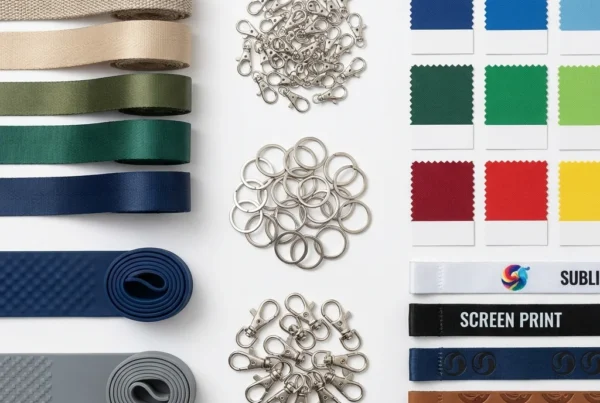
From vibrant full-color prints to luxurious woven designs, this guide breaks down the best customization methods to make your brand's lanyard unforgettable.
Quick Comparison of Techniques
Use this table for a quick overview of the most popular customization techniques for wholesale buyers.
| Technique | Best For | Look & Feel | Ideal Materials |
|---|---|---|---|
| Silk Print (Screen Printing) | Bold, solid-color logos | Tactile, slightly raised ink | Nylon, Cotton, Bamboo |
| Heat Transfer (Dye Sublimation) | Photographs & Gradients | Smooth, infused into fabric | Polyester, rPET |
| Offset Print | High-detail, full-color on smooth surfaces | Sharp, photographic quality | Specialty smooth polyester |
| Weaving (Jacquard) | Premium, durable branding | Textured, high-end | Polyester |
| Embroidery | Luxury, textured logos | Stitched, 3D effect | Heavy Cotton, Nylon |
| Gilding Print (Foil Stamp) | Metallic, reflective logos | Shiny, luxurious | Nylon, smooth Polyester |
In-Depth Technique Analysis
Every method offers a unique finish. Here’s a detailed look at each option to help you make an informed decision.
Silk Print (Screen Printing)
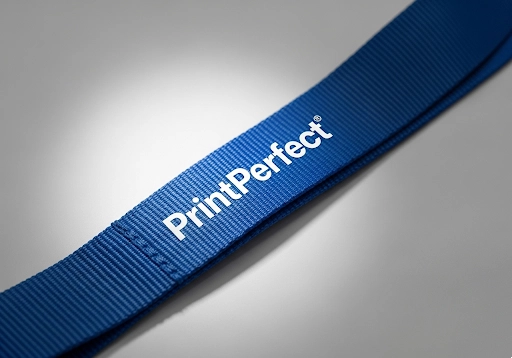
A classic technique where a mesh screen is used to push a layer of thick, durable ink onto the lanyard's surface. A separate screen is used for each color.
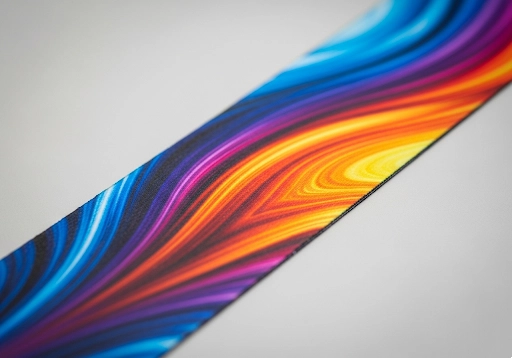
Heat Transfer (Dye Sublimation)
This digital process uses heat to turn ink into a gas, which then permeates the fabric fibers. The result is a permanent, full-color print with a smooth, untextured feel.
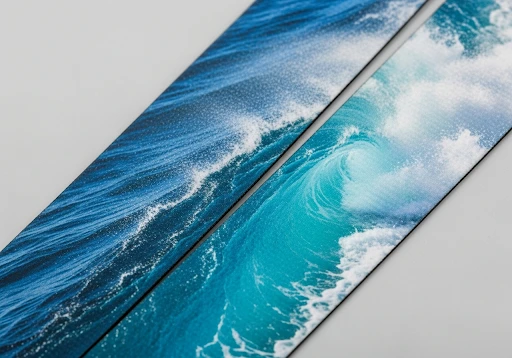
Offset Print
Similar to printing on paper, this method transfers ink from a plate to a rubber blanket, then onto the lanyard. It's excellent for capturing extremely fine details and subtle color transitions.
- Perfect for: Highly detailed logos, small text, and photorealistic images on very smooth surfaces.
- Materials: Requires specialty lanyards with a smooth, non-porous surface.
- Key Advantage: Unmatched sharpness and detail for complex graphics.
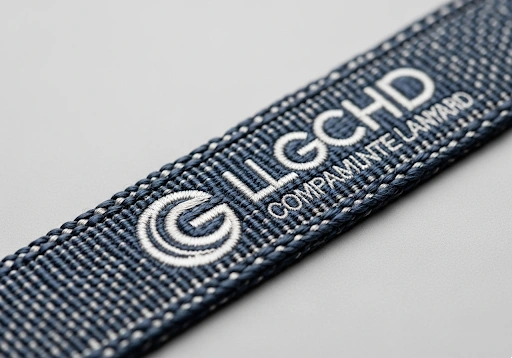
Weaving (Jacquard)
Instead of printing on top, the design is woven directly into the fabric using threads of your chosen colors. This creates a classic, high-end look similar to an embroidered patch.
- Perfect for: Simple text or logos where a premium, long-lasting impression is key.
- Materials: Primarily done on Polyester fabric.
- Key Advantage: The most durable option; the design will never wear off.
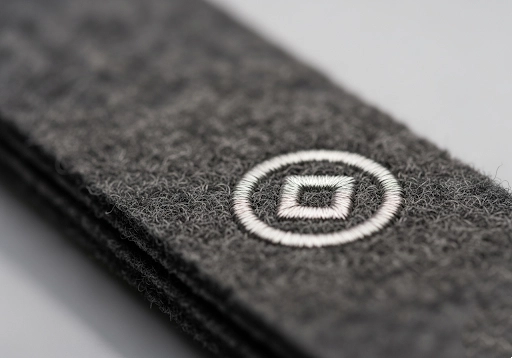
Embroidery
For a truly luxurious and textured effect, your logo can be embroidered onto the lanyard. This method adds a 3D feel and a high perceived value, perfect for premium brands.
- Perfect for: Small, detailed logos on wider lanyards for a retail-quality finish.
- Materials: Best on heavy-duty materials like Nylon or thick Cotton.
- Key Advantage: Unmatched premium look and feel.
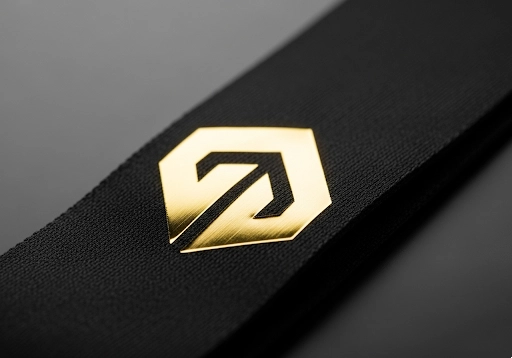
Gilding Print (Foil Stamp)
This technique uses heat and pressure to apply a thin layer of metallic foil to the lanyard's surface. It creates a brilliant, reflective finish that catches the light.
- Perfect for: Creating a sense of luxury, for VIP events, anniversaries, or high-end brands.
- Materials: Works best on smooth surfaces like Nylon or satin-finish Polyester.
- Key Advantage: Striking metallic effect (gold, silver, etc.) that cannot be replicated with ink.
Printing & Customization Questions
Both are great for full-color designs. Heat Transfer (Dye Sublimation) infuses ink into the fabric fibers, making it soft and permanent. Offset Print applies ink to the surface, offering slightly sharper detail but is best suited for very smooth materials.
Choose Gilding (Foil Stamp) when you want a true, reflective, mirror-like metallic finish. Screen-printed metallic inks have glitter-like particles and offer a shimmer, but they do not have the same level of shine as a foil stamp.
Yes. Silk Printing and Weaving offer the most precise Pantone color matching. For other methods, we use a CMYK process that provides a very close approximation, suitable for almost all branding needs.
Weaving is the most durable as the design is part of the lanyard itself. Heat Transfer and Embroidery are also extremely durable and will not peel or crack.
Yes, Heat Transfer (Dye Sublimation) is the perfect method for achieving a full-bleed, edge-to-edge print, as the design is printed on the fabric before it's cut and sewn.
To ensure the highest quality, we strongly recommend providing vector files. The preferred formats are: .AI (Adobe Illustrator), .EPS, or .PDF (with vector paths).
The best choice depends on your logo complexity, desired feel, material, and budget. Our team provides free consultations to help you select the perfect technique. For material choices, see our Complete Guide to Lanyard Materials.
Ready to Create the Perfect Lanyard?
You've got the knowledge, now let's get to work. Our specialists are ready to translate your material choice into a high-quality custom lanyard that perfectly represents your brand. Let's start the conversation.
Get a Free Consultation & Quote