The EU's Digital Product Passport (DPP): A Critical Guide for Importers on the 2027 Regulation
The European Union (EU) is initiating a regulatory revolution centered on the Digital Product Passport (DPP). For global supply chains and EU importers, this is not merely a new labeling requirement; it is a fundamental shift that establishes data transparency as a prerequisite for market access. The DPP is a digital record designed to integrate "cradle-to-grave" lifecycle information, including compliance, sustainability, and safety data.
This guide is written specifically for importers placing non-EU manufactured goods onto the EU market. For importers, the DPP is not an optional "green initiative"—it is the new license to trade in the EU. This report details the legal framework, the specific legal obligations for importers, the 2027 timeline, and a strategic roadmap to compliance.
Quick Guide: DPP for Importers
- Importers Bear Full Liability: If the manufacturer is non-EU, the importer is legally responsible for ensuring the product has an accurate DPP.
- 2027 is the Go-Live Date: The first wave of mandatory DPPs (for batteries, textiles, steel) begins staging in 2027.
- Penalties are Severe: Non-compliance risks include border rejection and "GDPR-level" fines (up to 4% of global turnover).
- Data is the New Product: Importers are now accountable for the verifiable integrity and accessibility of their product's data.
Part 1: The Legal Framework: What is the DPP and ESPR?
What is the Digital Product Passport (DPP)?
The DPP is a standardized, digital record integrating essential information about a product's characteristics, compliance, safety, and sustainability. It's a "digital twin" or "digital ID" for products, components, and materials, accessed via a unique identifier (like a QR code).
Legal Pillar: The ESPR
The DPP is mandated by the Ecodesign for Sustainable Products Regulation (ESPR), which took effect in July 2024. The ESPR is a "framework regulation" that replaces the old Ecodesign Directive and massively expands its scope from just energy-related products to cover nearly all physical goods sold in the EU (exceptions include food, feed, and medical products).
The ESPR sets the general principles, while specific data requirements for products (like textiles) will be detailed in subsequent "Delegated Acts."
Read the full ESPR Regulation →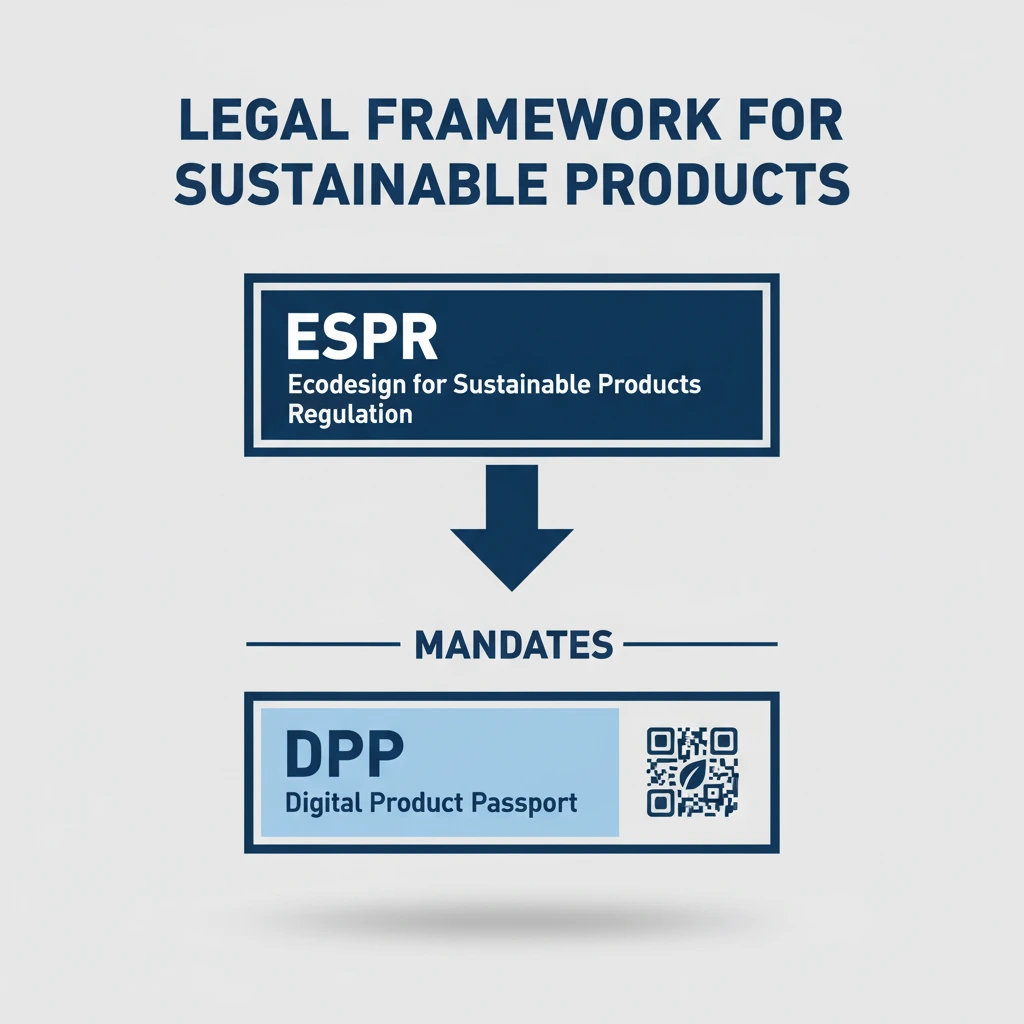
Part 2: The Importer's Critical Role: Obligations & Legal Liability
The Importer as the "Gatekeeper"
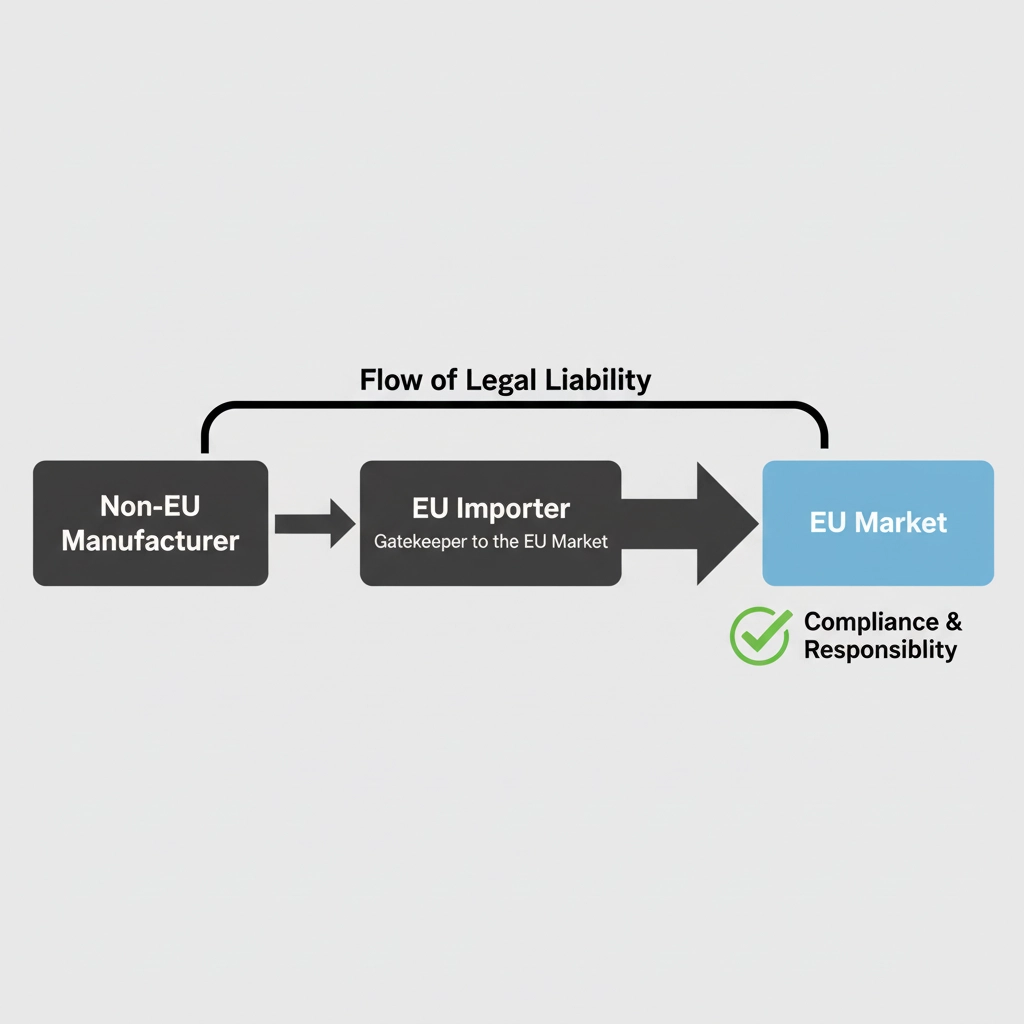
While the manufacturer is the "primary responsible party," a critical legal clause determines the importer's fate: If the manufacturer is not established in the EU, the importer is legally responsible for "ensuring the product they place on the market complies with this Regulation and that the digital product passport is available."
The "White-Label" Liability Trap
Importers assume the full legal liability of a manufacturer if they place a product on the market under their own name or trademark (i.e., "white-labeling" or "private-labeling"). This means you are responsible for creating, maintaining, and hosting all DPP data, not just verifying it.
Your Contract is Your Only Defense
EU legislators cannot directly regulate non-EU factories. Therefore, the ESPR forces importers to act as de-facto regulatory agents by placing 100% of the legal and financial liability on them. Your only protection is a strong supplier contract that mandates data sharing, guarantees data accuracy, and indemnifies you against any losses from their errors.
Part 3: The 2027 Timeline: The First Wave of Products
2027 is "Year Zero" when the DPP moves from theory to mandatory reality. The rollout is phased by product category. Importers must act now, as these deadlines apply to products *placed on the market*.
| Date | Regulatory Milestone | Affected Product Categories |
|---|---|---|
| Feb 18, 2027 | EU Battery Regulation | Industrial & EV Batteries (>2kWh) |
| July 2027 (Est.) | ESPR Delegated Act | Textiles & Footwear |
| Oct 2027 (Est.) | ESPR Delegated Act | Iron, Steel & Aluminum |
| 2027 (Est.) | ESPR Delegated Acts | Tires, Detergents, Electronics (Repairability) |
| 2028-2029 (Est.) | ESPR Delegated Acts | Furniture, Mattresses, Electronics (Durability) |
The Battery Passport is the "canary in the coal mine." Its technical and legal challenges will almost certainly become the template for textiles, electronics, and other products.
Part 4: DPP Data Architecture: What You Must Collect
While exact data points will be set by Delegated Acts, the ESPR (Annex III) provides a clear framework. Access to this data will be tiered based on a "need-to-know" basis.
| Data Category | Example Data Points | Primary Access Group |
|---|---|---|
| 1. Identity & Compliance | Unique ID, Model, EU Declaration of Conformity (DoC), Certificates. | Public / All Parties |
| 2. Materials & Origin | Material composition, Country of origin, List of Substances of Concern (SoC). | Regulators, Recyclers |
| 3. Environmental Footprint | Carbon footprint (LCA), Water usage, Energy efficiency class. | Regulators, Consumers |
| 4. Circular Economy | Repairability score, Recycled content percentage, Spare parts availability. | Repairers, Recyclers, Consumers |
| 5. User & End-of-Life | Safety manuals, Repair guides, Disassembly and disposal instructions. | Consumers, Repairers, Waste Facilities |
Part 5: Technical Infrastructure: The "Decentralized Registry"
The "Phone Book," Not a "Data Warehouse"
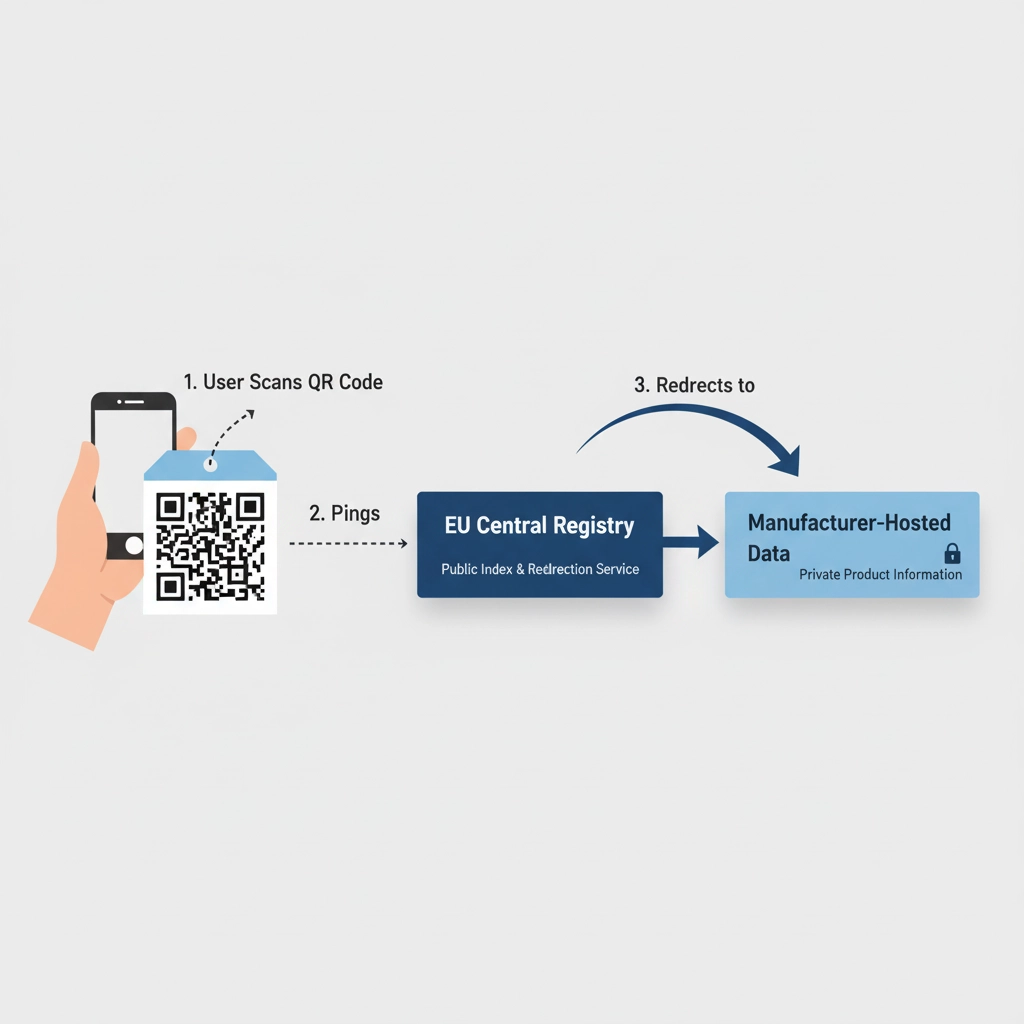
A common myth is that the EU will host all product data. This is incorrect. The system is decentralized to protect trade secrets.
- A Data Carrier (QR code, RFID) on the product links to a Unique ID.
- A user scans the ID, which pings the central EU DPP Registry.
- The Registry acts as a "phone book"—it only redirects the user to the data's actual location.
- The data itself is hosted by the manufacturer or importer on a private, secure server, which then grants access based on the user's role (e.g., consumer vs. customs).
This places a significant, 10-year data hosting and maintenance burden directly on the economic operators. If your non-EU supplier's server goes down, you, the importer, are still liable.
Part 6: Enforcement & Penalties
The Two-Step Enforcement Process
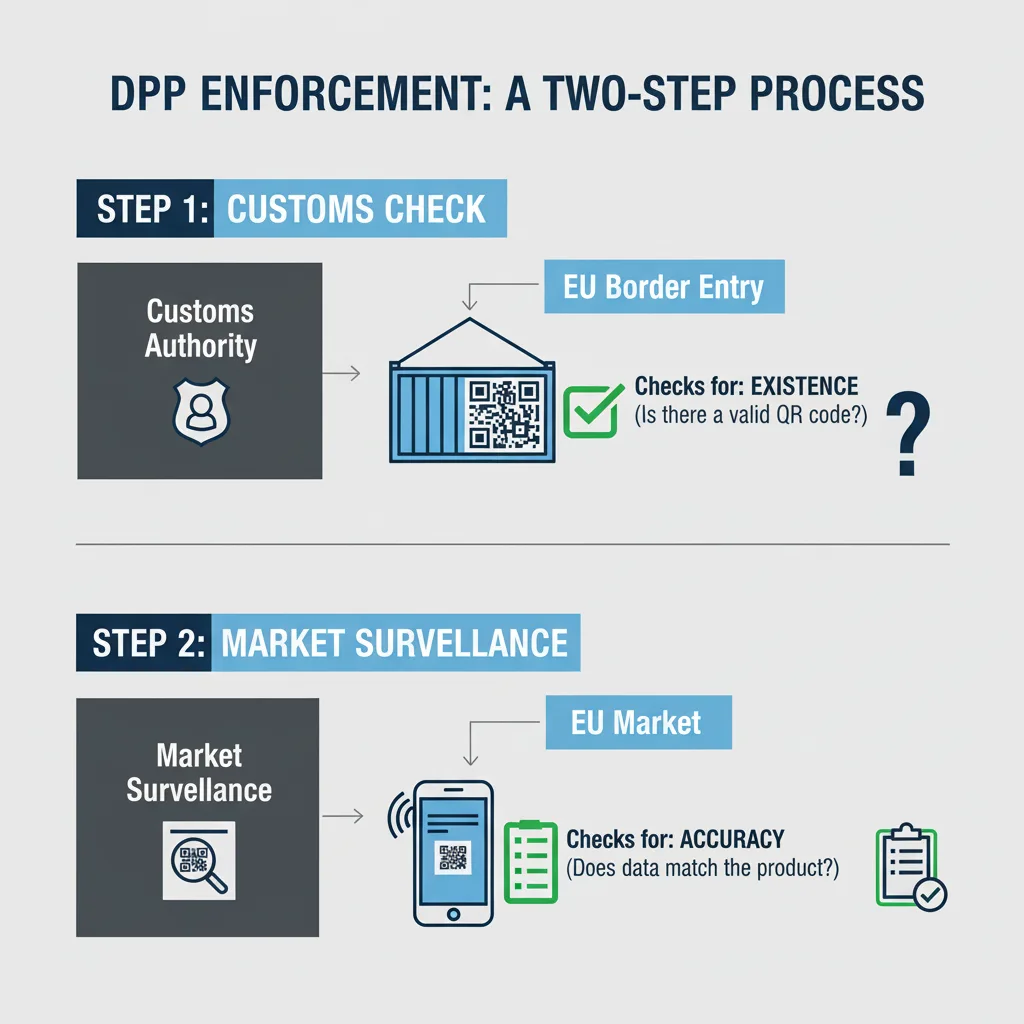
Enforcement is a two-step process:
1. Customs (The Gateway): Customs will perform an automated existence check. They will scan the data carrier. If the ID is not found in the central registry, the product is denied entry into the EU. This is an immediate, catastrophic supply chain disruption.
2. Market Surveillance (The Police): After the product is in the EU, national Market Surveillance Authorities (MSAs) will perform targeted accuracy checks. They will conduct physical and lab tests to verify the data claims (e.g., "Does this T-shirt *really* contain 30% recycled cotton?").
The "GDPR-Level" Penalties
The penalties mimic the GDPR framework: fines up to 4% of global annual turnover, product recalls, import bans, and exclusion from public procurement. Furthermore, the regulation opens the door to civil liability and collective action lawsuits from consumers over inaccurate "green" claims.
Part 7: The Importer's 5-Step Action Plan for DPP Compliance
Compliance is not just a legal problem; it is a data governance problem. Importers must start immediately. This is your strategic roadmap.
-
1. Audit & Gap Analysis
Use the tables in this guide to audit your current product data against DPP requirements. Identify your "high-risk" products (textiles, electronics) and determine what data you are missing.
-
2. Map Your Supply Chain
You must go beyond your Tier 1 supplier. You now need data from your Tier 2 (fabric mill) and Tier 3 (raw material) suppliers. Begin data requests (RFIs) immediately.
-
3. Revise Supplier Contracts
Your current contracts are obsolete. You must add new legal clauses that mandate data sharing and include an indemnity clause that holds the supplier financially responsible for any penalties you incur from their inaccurate data.
-
4. Implement a Tech Platform
Spreadsheets will fail. You need a PIM, PLM, or dedicated DPP platform capable of ingesting supplier data, managing access rights, and integrating with the EU Registry via API.
-
5. Run a Pilot Program
Choose one "high-risk" product and one key supplier. Test the entire flow: from data collection in Asia to scanning the final QR code in your EU warehouse. Train your legal, logistics, and procurement teams.
DPP & ESPR: Frequently Asked Questions
Quick answers to the most critical questions importers are asking about the Digital Product Passport.
The first hard deadline is Feb 18, 2027, for Batteries. The deadlines for other products (like textiles, steel) will be set by 'Delegated Acts' (specific laws) expected to pass in 2025/2026, making them mandatory starting mid-2027.
No. The ESPR regulation clearly states that if the manufacturer is outside the EU, the importer bears the full legal responsibility to ensure the product is compliant and has an accurate DPP. You are the legal gatekeeper.
You (the importer) are liable. This is why you cannot rely on PDFs. The data must be verifiable in the EU's central registry. If the data is missing or inaccurate, your products can be rejected at customs, and you may face 'GDPR-level' fines (up to 4% of global turnover).
BSCI/GOTS are *inputs* to the DPP. The DPP is the *container* for all compliance data. Your GOTS certificate is proof of organic content that will be linked in the DPP, but it is not the DPP itself. The DPP also contains carbon footprint, repairability, and material origin data.
No. This is the most common myth. The DPP uses a tiered, role-based access model. A consumer will see basic data (e.g., how to recycle), while a customs agent will see compliance data, and a recycler will see material composition. Your core trade secrets (like your specific supplier list) are not public.
The EU Registry does not store your product data. It is a "phone book" or "look-up system." When a QR code is scanned, the Registry only tells the user's device where to find the actual data, which is hosted on a private, decentralized server managed by you or your manufacturer.
Start a Data Audit & Gap Analysis. Take one of your 'high-risk' products (e.g., a textile) and use the tables in this guide to map out what data you currently have versus what the DPP will require. You will quickly find your 'data gaps.'
The ESPR framework covers almost all physical goods. The primary exemptions are for food, animal feed, and medical products, as these are already covered by separate, strict traceability regulations.
The 'data carrier' is the physical tag on the product. The EU will likely allow multiple types, such as QR codes (for easy consumer access) and RFID/NFC tags (for B2B logistics and customs to scan items in bulk without line-of-sight).
The CE mark states that a product is safe at the point of sale. The DPP documents a product's entire lifecycle—its origin, carbon footprint, recycled content, and how to repair/recycle it. DPP is a massive expansion of accountability from safety to sustainability.
Ready to Secure Your 2027+ Supply Chain?
The Digital Product Passport is a complex challenge, but it also offers an opportunity. Those who build transparent, verifiable data systems first will win the market. Let our team of sourcing and compliance experts help you build a resilient, DPP-ready supply chain today.
Start Your DPP Consultation