Grown, Not Born: The Science of Mycelium Leather
Mycelium is the underground root structure of mushrooms. By guiding its growth in controlled environments, we can create a dense, fibrous mat that replicates the strength and feel of animal leather—without raising a single cow or using a drop of plastic.
This guide explains the bio-fabrication process, compares it to traditional leather, and details why leading fashion houses are switching to this sustainable powerhouse. It is not just an alternative; it is the future of material science.
Quick Material Guide
- Source: Fungal roots (Mycelium) grown on sawdust substrate.
- Time: Grown in 2 weeks (vs. 2-3 years for cattle).
- Feel: Warm, soft, cellular structure similar to sheepskin.
- Impact: Carbon neutral, water efficient, plastic-free.
The Sustainability Math
| Metric | Mycelium | Cow Leather | PU (Plastic) |
|---|---|---|---|
| CO2 Emissions | Very Low (Carbon Neutral) | High (Methane) | Medium |
| Water Usage | Low (< 10 Gallons) | Very High (> 2000 Gallons) | Low |
| Plastic Content | 0% (Bio-based) | 0% (Usually) | 100% (Petroleum) |
| Biodegradable | Yes (Home Compostable) | Yes (if Veg Tan) | No (Microplastics) |
Deep Dive: From Spores to Sheets
1. The Vertical Farm
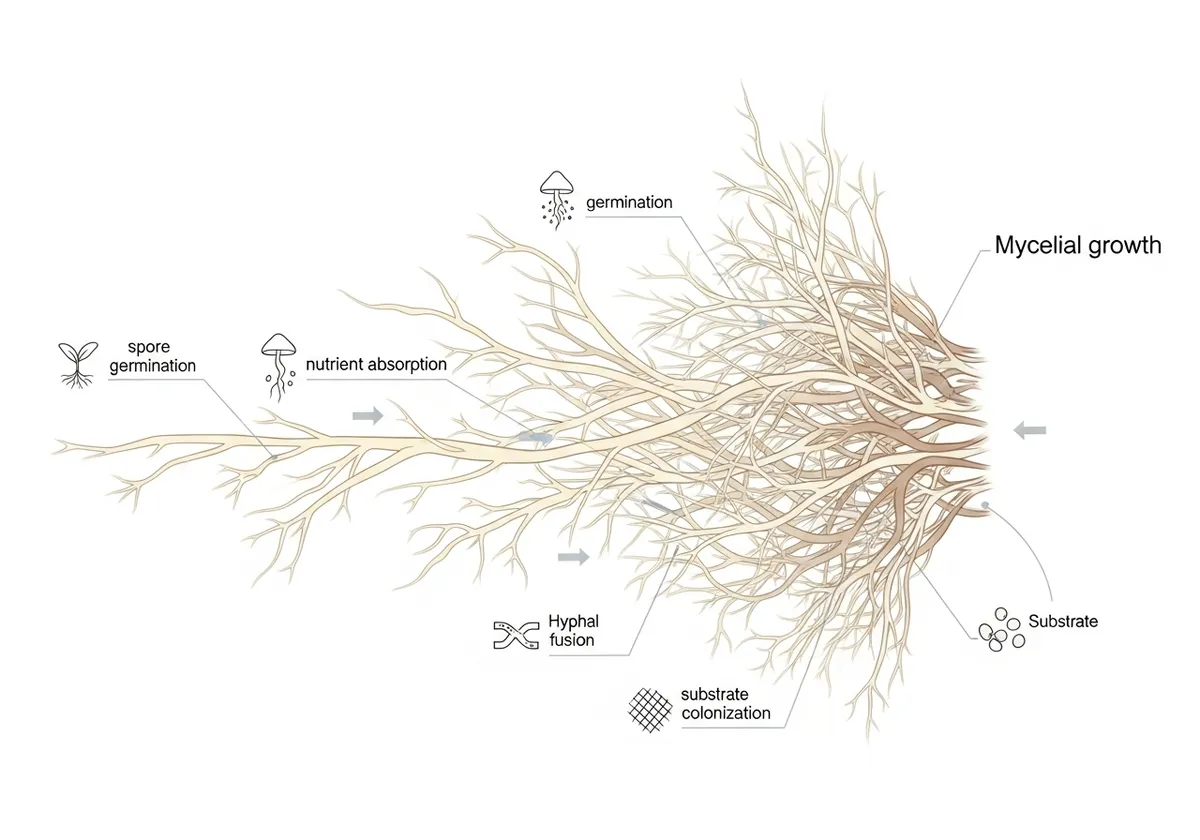
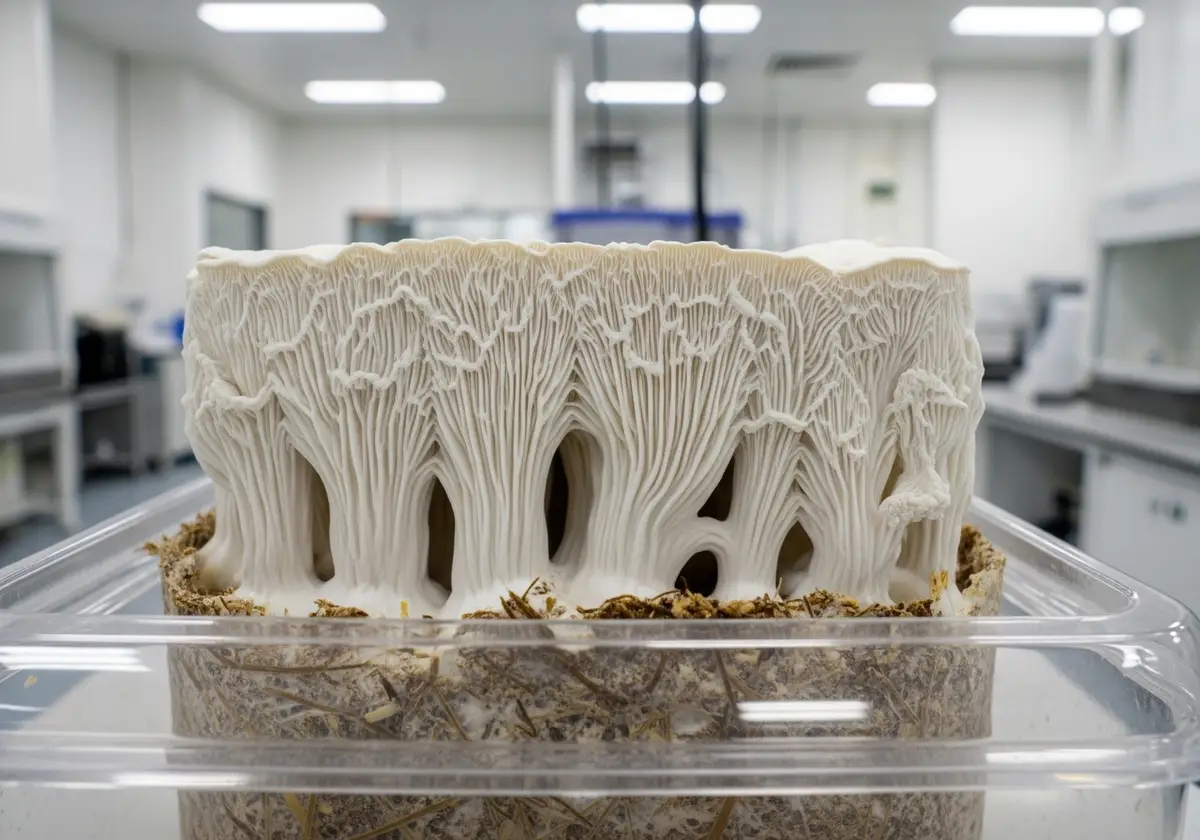
Bio-fabrication at Scale. We mix fungal spores with organic waste (sawdust, agricultural husks) in vertical trays. In a dark, humid room, the mycelium "eats" the sawdust and grows into a thick, foamy mattress of billions of tiny fibers.
- Efficiency: Uses vertical space, requiring minimal land footprint.
- Self-Assembly: The fibers weave themselves together naturally, creating a strong 3D network without weaving or knitting.
2. Harvest & Compress
Refining the Material. After 2 weeks, the foam "mattress" is harvested. It is then compressed, dyed with natural pigments, and tanned using green chemistry to preserve it. The result is a sheet of material that is consistent, durable, and beautiful.
- Customization: Texture and thickness can be adjusted during compression.
- Finishing: Can be embossed with animal-like grains or kept smooth for a modern look.
Frequently Asked Questions
What is Mycelium Leather made of?
Mycelium leather is made from the vegetative part of a fungus, consisting of a network of fine white filaments (hyphae). We grow it on organic sawdust substrates where it forms a dense, fibrous mat that resembles the microstructure of collagen in animal skin.
Is Mushroom Leather durable?
Yes. Mycelium Leather is engineered to rival animal leather in strength and tensile durability. Because it is grown as a 3D network of fibers rather than a woven fabric, it does not fray and holds stitching exceptionally well.
How long does it take to grow?
It takes approximately 2 weeks to grow a full sheet of Mycelium material. Compare this to the 2-3 years required to raise a cow for leather, making it a vastly more efficient production method.
Is it 100% plastic-free?
Yes. Unlike "Vegan Leather" made from PU (Polyurethane) or PVC, our Mycelium material is 100% bio-based and plastic-free. It uses natural tanning agents and finishes, ensuring it remains biodegradable.
Is Mycelium Leather biodegradable?
Yes. Being a natural fungal material, it is fully biodegradable and home compostable at the end of its life cycle, provided it is not treated with synthetic, non-degradable coatings.
What does it feel like?
It has a warm, soft touch similar to sheepskin or high-quality calfskin. The texture is organic and can be customized during the compression and tanning process to be smooth or pebbled.
Can it be dyed different colors?
Absolutely. Mycelium is naturally absorbent and takes natural dyes very well. We can achieve a wide range of earth tones and vibrant colors using eco-friendly, chrome-free dyes.
Is it waterproof?
Mycelium is naturally water-resistant, but like animal leather, it is not 100% waterproof. appearing porous, we apply eco-friendly wax coatings to enhance its water repellency for daily use.
Does it smell like mushrooms?
No. After the tanning and finishing process, the material has a neutral, slightly earthy scent, similar to vegetable-tanned leather, but without the strong chemical orders of synthetic alternatives.
Is it expensive compared to leather?
Currently, Mycelium Leather is priced similarly to premium top-grain animal leather due to the advanced technology involved. However, as production scales, costs are expected to drop below that of animal leather.
What products can be made from it?
It is distinctively versatile and can be used for tote bags, wallets, watch straps, footwear, and even automotive interiors. Its structural integrity makes it suitable for both soft goods and semi-rigid items.
How do I care for Mycelium products?
Care is similar to quality leather: keep it clean and dry, wipe with a damp cloth if soiled, and occasionally apply a natural wax conditioner to maintain its suppleness and water resistance.
Experience the Future
Request a physical sample kit to feel the texture of our Mycelium Leather.
Explore Products
See our finished products made from this revolutionary material.
Request Sample Kit
We'll send you swatches of Mycelium leather in various finishes.
- ✓ Full Color Swatch Book
- ✓ Texture Comparison