The Ultimate Guide to Metal Plating & Finishes for Custom Pins
The metal finish of a custom pin is the first thing people notice, setting the tone for its perceived value. Choosing the right plating—from brilliant gold to subtle antique copper—is critical for achieving a retail-ready look. More importantly, selecting the right plating ensures your wearable product meets global compliance standards (e.g., being nickel-free).
This expert guide breaks down the core metal finishing options and manufacturing processes available for custom pins, helping you specify the perfect final product for employee recognition or retail.
Quick Guide
- Polished Finishes: Best for high contrast and maximum shine (Gold, Silver).
- Antique Finishes: Best for highlighting metal detail and achieving a sophisticated, aged look.
- Matte Finishes: Best for a modern, subtle appearance where the enamel colors stand out.
- Compliance Check: Always request Nickel-Free plating for the EU market.
Step 1: Selecting Your Final Plating (Color and Shine)
The metal plating provides the final color and polish. We source compliant, high-quality finishes to ensure longevity and brand accuracy, managing three primary aesthetic categories:
- Polished Finishes: Shiny Gold or Shiny Silver (Nickel). This is the classic, reflective finish, perfect for creating a brilliant, high-contrast look when combined with enamel color fills.
- Matte Dyes: Matte Black or Black Nickel. These finishes are modern, subtle, and non-reflective, allowing the enamel colors in your design to stand out against a dark, sleek background.
For wearable items in the EU, we always ensure the plating is Nickel-Free to meet REACH compliance standards.
Read Our Metal Finishing Guide →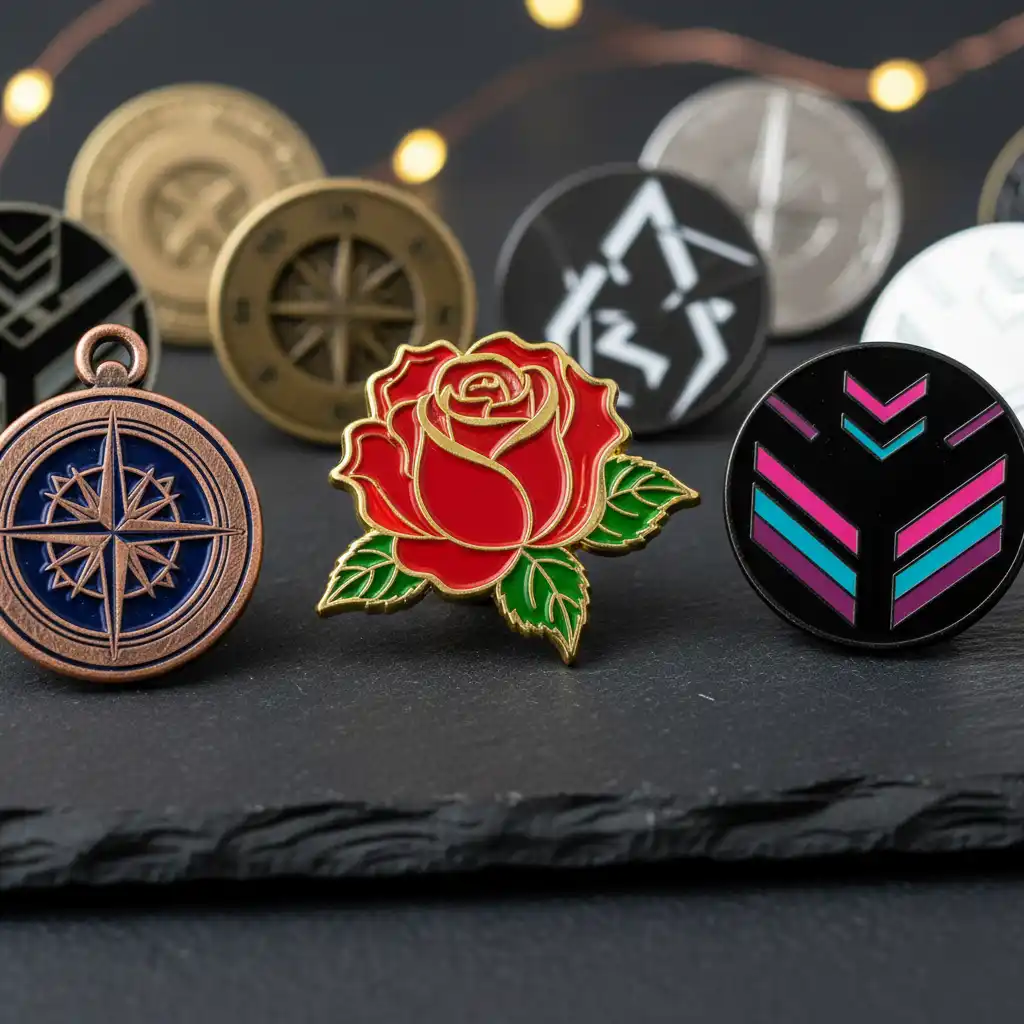
Step 2: Antique Finishes for Sophisticated Detail
Antique finishes create depth and definition, making them an excellent choice for logos that rely on fine detail or where a brand requires a classic, heritage aesthetic.
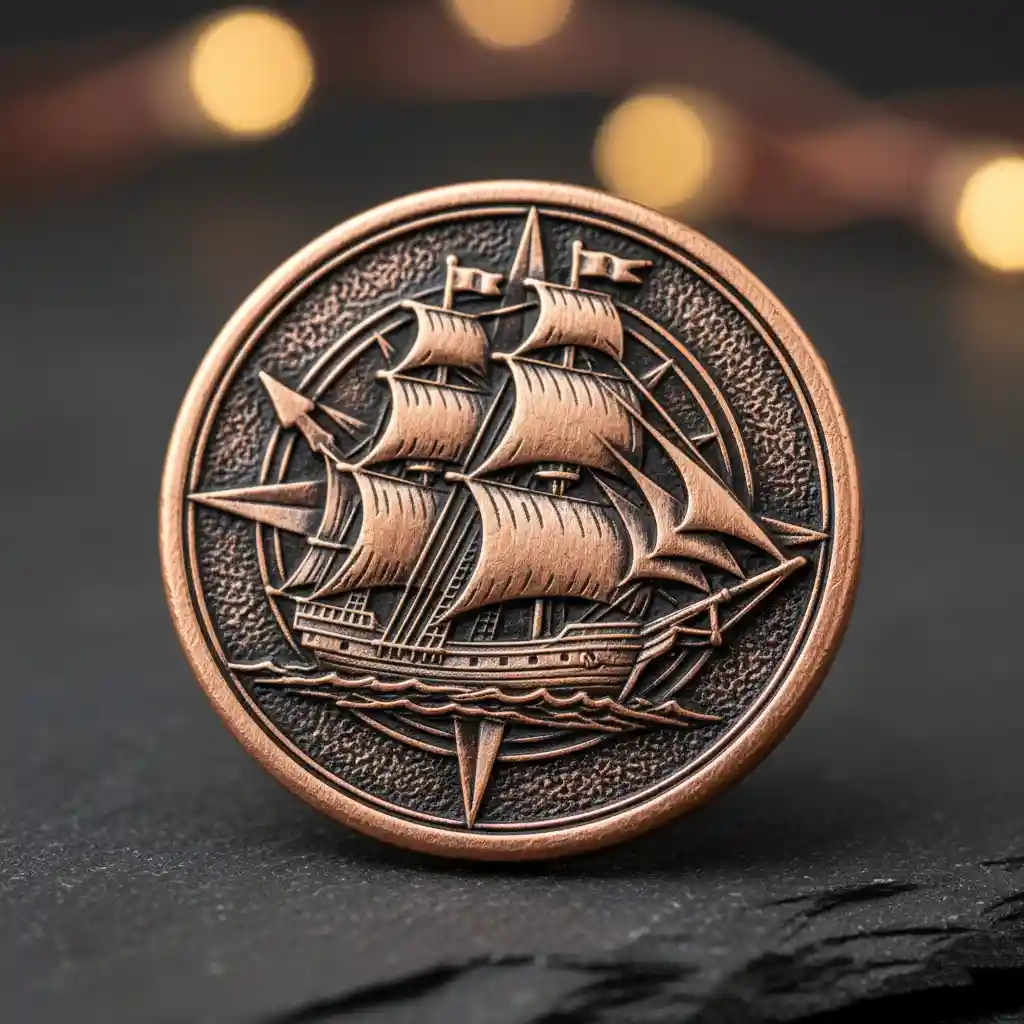
- Antique Brass or Copper: These finishes give the pin a sophisticated, aged look. The recessed areas of the metal are intentionally darkened, while the raised surfaces are polished.
- Highlighting Intricacy: Antique plating is often used for designs without enamel color fills (Die Struck Pins), as the contrast between the dark recesses and shiny ridges makes the fine metal details "pop."
Step 3: Understanding Die Struck vs. Die Cast Metalwork
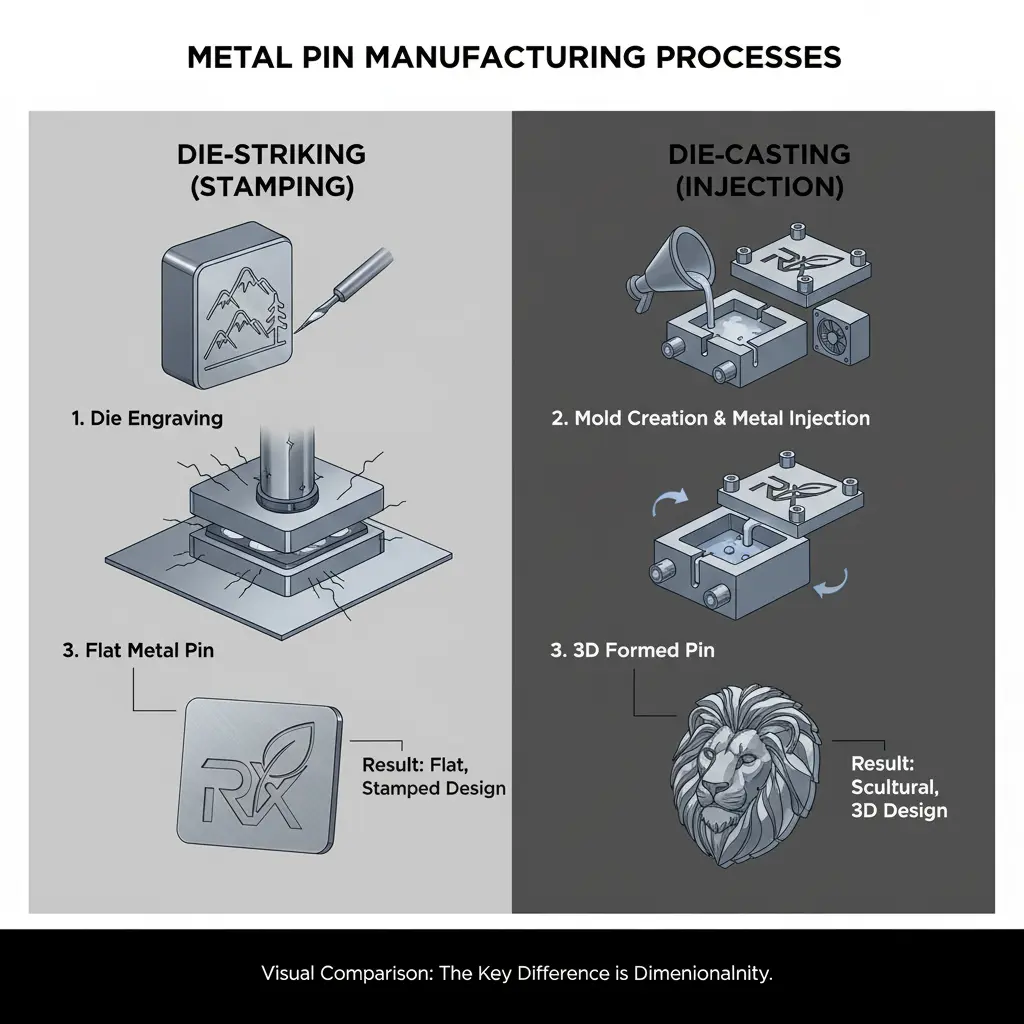
The manufacturing process determines the dimensions and complexity of the metal itself. For premium products like corporate pins and medals, we use one of two metalworking techniques:
- Die Struck (Stamping): Used for 2D designs and flat pins. A custom die stamps your logo into a sheet of metal, creating raised and recessed areas (perfect for soft enamel filling or metal-only pins).
- Die Cast (Molding): Used for complex, 3D shapes and designs that require intricate cut-outs or continuous curved surfaces (like custom medals or pins shaped like mascots). Molten metal is injected into the custom mold.
Compliance & Safety Deep Dive: Wearable Metal Products
For wearable items, safety is non-negotiable. We ensure all metal content, enamels, and platings comply with the world's strictest chemical and material regulations.
| Standard / Regulation | Compliance Focus | Why it Matters to You |
|---|---|---|
| REACH (EU) | Nickel Release & Lead Content | Mandatory for all products sold in the EU that have prolonged skin contact (pins, jewelry). Our factories provide Nickel-Free certification. |
| Prop 65 (USA - CA) | Lead, Cadmium, Phthalates | Required for sale in California. We proactively test raw materials and enamel fillers to ensure they fall within safe harbor limits. |
| CPSIA (USA - Children) | Heavy Metals (Lead) | Critical if your pins are targeting children or being sold as toy accessories. We test for extremely low lead limits. |
| BSCI Audit | Ethical Manufacturing | Verifies that the pin factory adheres to high standards for labor, safety, and ethical working conditions. |
Plating Comparison: Choosing the Best Finish
Use this checklist to weigh the cost, durability, and aesthetic value of the three main plating categories before ordering.
| Feature | Polished Nickel/Gold | Antique Brass/Copper | Matte Black Dye |
|---|---|---|---|
| Perceived Value | High (Bright, classic look) | Very High (Classic, subtle, collectible) | High (Modern, striking contrast) |
| Best Use | Service Awards, Retail, Trading Pins | Fine Detail Work, Corporate Milestones | Modern Brands, High-Contrast Designs |
| Durability/Scratch Risk | Good | Excellent (Aging adds to the look) | Good (Can show bright metal underneath if heavily scratched) |
| Price (Index) | $ (Standard) | $$ (Slightly higher labor) | $$ (Special process) |
Risk Mitigation: Our 3-Step Quality Guarantee
The largest risk in sourcing metal pins is mold error or compliance failure. Our process is designed to eliminate risk at every stage.
1. Digital Proofing & Tooling Review
We start with a 2D digital proof of your design over the chosen metal and plating. For complex pins, we provide a 3D render for structural approval. We check the design against manufacturing constraints before the expensive metal mold is made.
2. Pre-Production Sample (PPS)
You receive a physical, finished sample pin (PPS). This allows you to inspect the enamel color match(PMS match), the feel of the plating, and the backing quality before we proceed with the bulk order. This is your final quality checkpoint.
3. Batch QC & Compliance Testing
Our on-site team conducts Batch Quality Control (AQL), checking for enamel flaws, scratches, and incorrect plating finish. We also manage batch testing with certified labs (SGS/Intertek) to provide the final REACH/Prop 65 compliance documents you need for customs and retail sale.
Metal Finishing & Compliance FAQ (Cont.)
Find quick, expert answers about metalwork, compliance, and ordering details.
All our metal platings are durable, but polished gold and polished nickel (silver) are inherently the strongest finishes against general wear. Antique and matte dyes are durable, but laser engraving may scratch the coating if handled roughly.
Our standard polished silver finish uses nickel plating for its brilliant shine and durability. However, we offer a specialized Nickel-Free substitute (e.g., Rhodium or special alloy) for all customers who require REACH compliance for the European market.
It depends. If the design is complex in terms of shape (3D sculpted), it must be Die Cast. If it requires deep color fills, soft enamel works, but the metal lines may lose detail due to the complex surface geometry. We recommend a simpler design for the Soft Enamel process.
The difference is minimal. The Antique finish involves an extra chemical step (antiquing bath) followed by hand polishing. While this is an additional process, the raw material cost is largely the same, so the final price is usually negligible compared to the Polished finish.
This is where our expertise comes in. We match enamel colors using PMS codes. We match metal plating to a desired shade (Gold, Silver, Copper, Black). Your brand guide may specify "Brass," and we select the appropriate metal alloy/plating (e.g., Antique Brass or Polished Brass) to hit that visual target.
Yes, this is called Dual Plating. It adds complexity to the manufacturing process but creates a highly premium, high-contrast look by defining different metal areas. For example, the recessed background might be antique silver, while the raised logo element is polished gold.
REACH (Registration, Evaluation, Authorisation and Restriction of Chemicals) is the primary EU regulation. For pins, it critically means the pin material and plating are tested and certified to be free from harmful levels of substances like lead and cadmium, and that nickel release is below the legal threshold for prolonged skin contact.
Yes, laser engraving is permanent. It works by precisely burning away the top plating layer to reveal the base metal underneath. This mark is physical and will last as long as the pin itself, making it an excellent branding method for backstamps and sequential numbering.
For large metal areas, we recommend either Antique Finishes (which mask minor imperfections and highlight detail) or Matte Finishes (which reduce reflections and give a modern look). Polished finishes require the highest level of surface perfection to avoid showing small scratches.
The mold creation process (tooling) typically takes 7 to 10 days. This includes the creation of the steel die and the initial metal stamping/casting before any enamel or plating is applied. This timing is always factored into the 3-4 week total production lead time.
Ready to Create a Symbol of Lasting Value?
The right metal finish can elevate your pin into a treasured keepsake. Let our team guide you through the process, ensuring the perfect blend of aesthetic appeal and compliance.
Begin Your Pin Sourcing Project