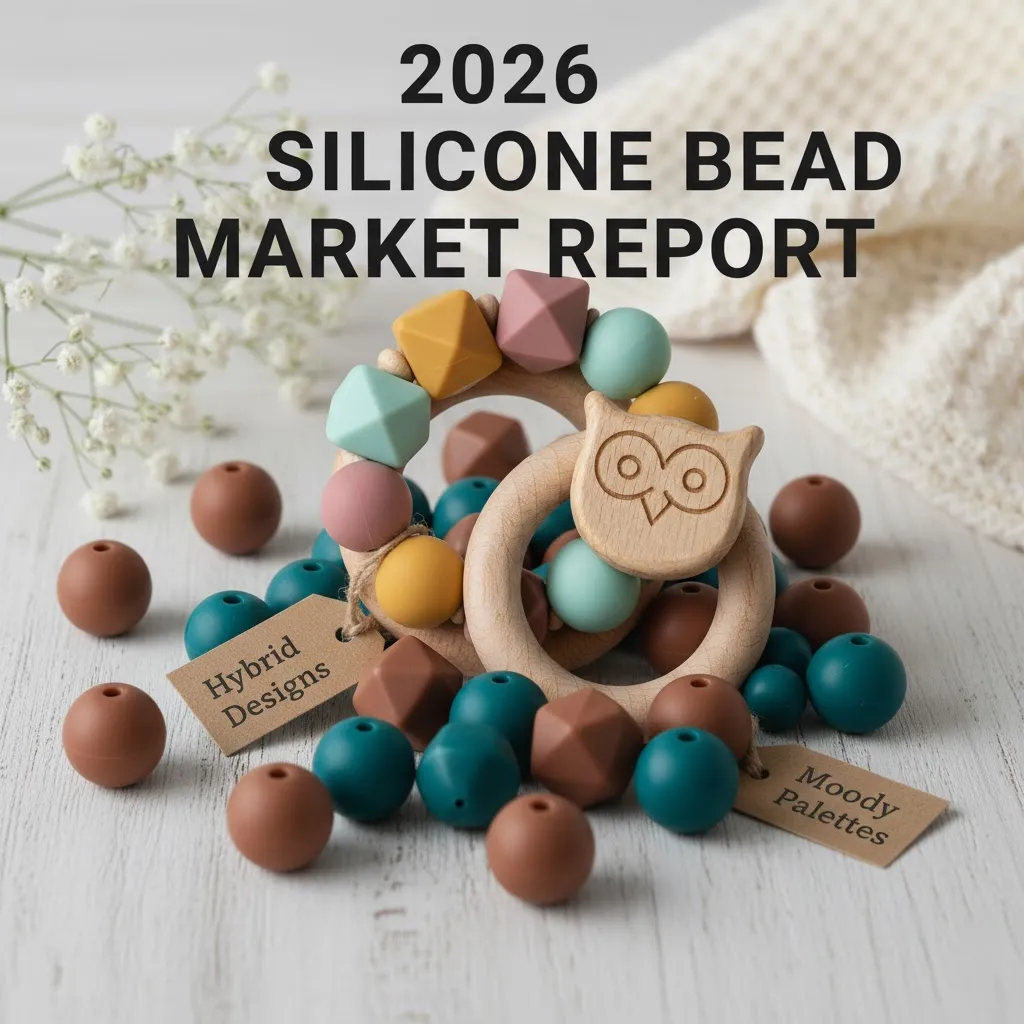
The silicone bead market is not what it seems. This report provides a critical B2B analysis, revealing five key realities:
- Price is dictated by the EV and Medical industries, not crafting.
- The 2026 aesthetic is "Adult-First," with moody, earthy palettes.
- The trend is driven by a psychological need for "Tactile Mindfulness."
- A CPSC vs. FDA "liability trap" creates significant risk for sellers.
- Silicone is not biodegradable, and marketing must pivot to durability.
Executive Trend Summary
- Market Risk: Prices are tied to the $24.5B global silicone market (EVs, Medical), not crafting.
- Legal Risk: CPSC requires testing on the *final product*, not just the beads. Most small sellers are likely non-compliant.
- Aesthetic: "Adult-First" palettes (WGSN's "Cocoa Powder") and "Focal Beads" are key.
- Strategy: Pivot from "eco-friendly" (false) to "durability" (honest).
Data Snapshot: The Industrial Market Driving Your Craft Supply
The 4 Key Consumer Trends for 2026
Trend 1: The "Adult-First" Aesthetic (Moody & Complex)
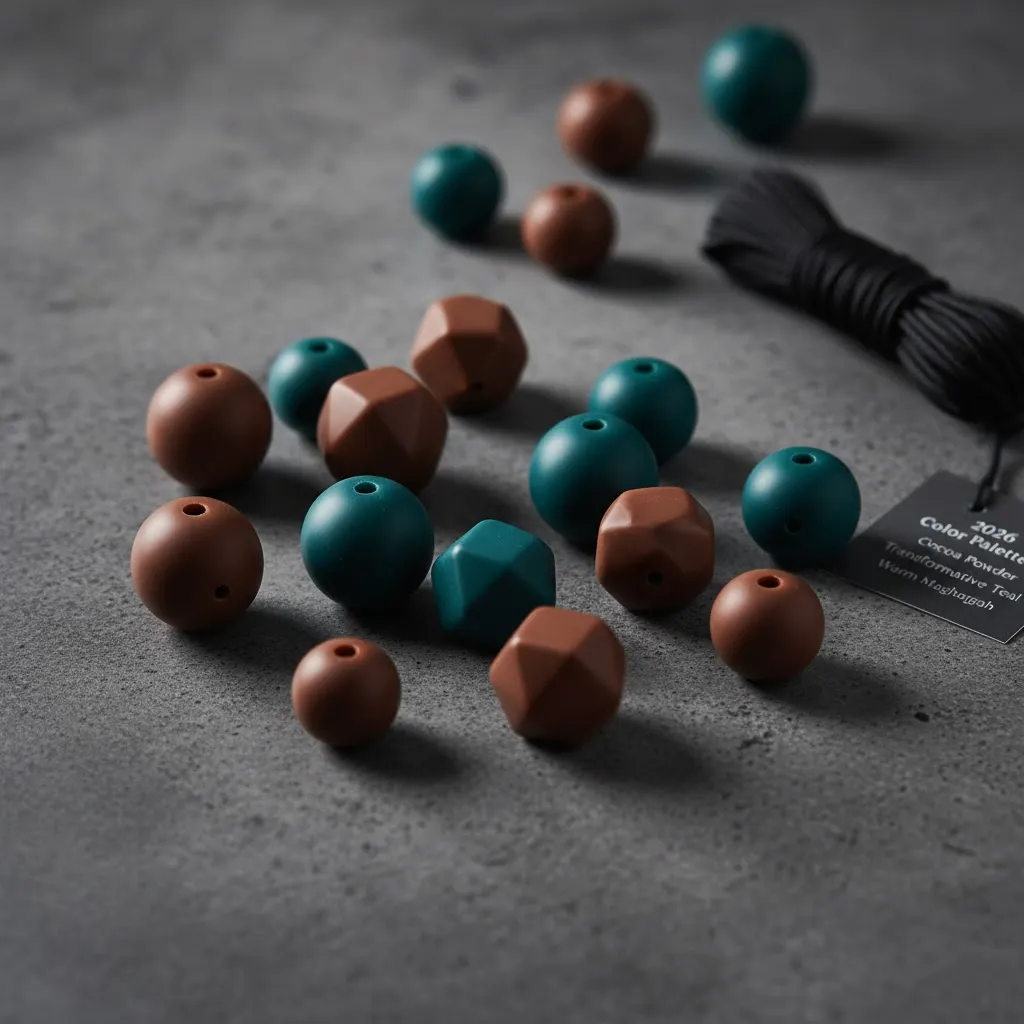
The 2026 design language is no longer "baby first." It's dictated by adult home decor. The forecast points to a sophisticated, earthy palette of warm browns (WGSN's "Cocoa Powder"), deep reds (PPG's "Warm Mahogany"), and complex blue-greens (WGSN's "Transformative Teal"). This "Organic Modern" aesthetic is designed to fit naturally into a stylish home rather than looking like plastic nursery clutter.
- For Corporate/Resellers: Stocking these complex, "moody" colors is essential. Your customers (Etsy sellers, gift boutiques) are buying for the parent's aesthetic, not the baby's.
- For Importers: Your commodity business is at risk. You must secure a supply of these new 2026 colors (teals, deep reds, earthy browns) to stay relevant.
Trend 2: The "Focal Bead" (Competing on Niche)
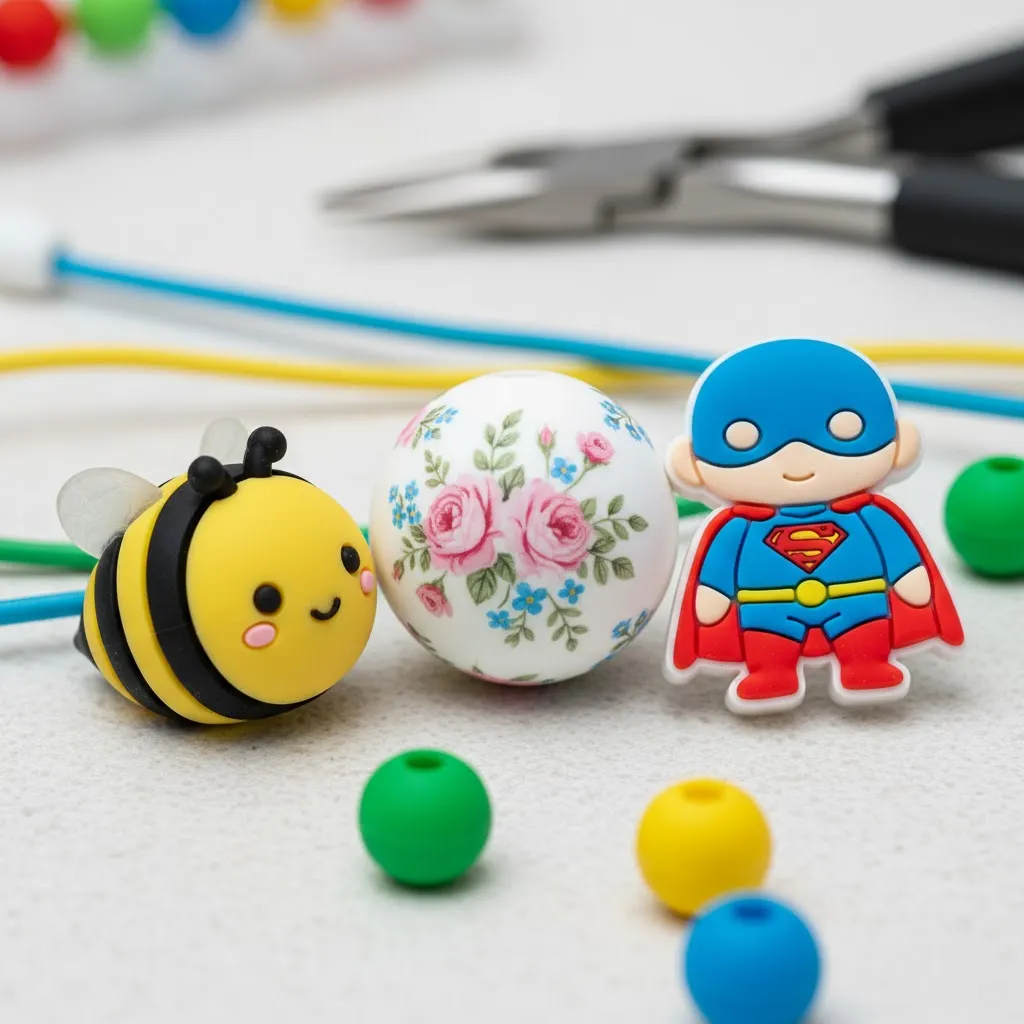
In this market, the standard 15mm round bead is a low-margin commodity. The true differentiator and value-driver is the "Focal Bead"—a larger, 3D-shaped, or intricately printed bead. These allow for deep personalization and cater to hyper-specific micro-identities (e.g., "Nurse," "Dog Mom," "Teacher," or even niche hobby-themed beads) that are critical for success on platforms like Etsy.
- For Corporate Buyers: This is your key to personalization. A "beadable pen" kit for a "Teacher Appreciation" gift is a perfect, low-cost, high-value item.
- For Resellers/Importers: Your profit is in the focal beads, not the round ones. Success requires an "ear-to-the-ground" strategy of sourcing unique floral, character, and niche focal beads that align with emerging TikTok trends.
Trend 3: The DIY Kit (Gifting an Experience)
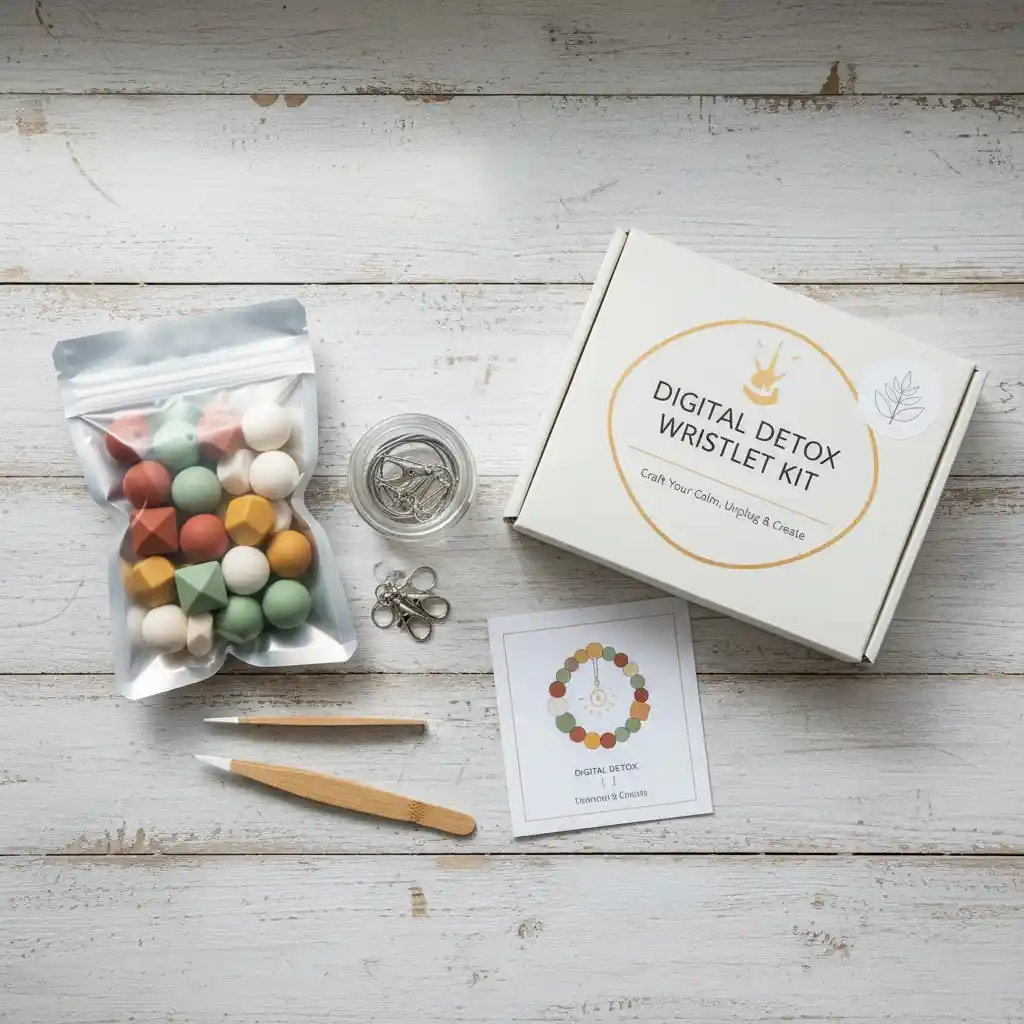
The business model is shifting from selling finished goods to selling curated DIY kits. The product is not the bead; it's the *experience*. These kits are marketed as a "digital detox," a tool for "mindful crafting," and an "anti-screen" activity. This model is strategically superior: it transfers labor costs to the consumer and has a higher perceived value by offering "Skill-Building & Empowerment."
- For Corporate Buyers: This is a perfect employee wellness gift. A "DIY Beadable Pen Kit" is an interactive, "hands-on" item for a virtual team-building event.
- For Resellers/Importers: Stop selling just beads; start selling *kits*. Curate all-in-one kits for "Wristlet Keychains" or "Lanyards." This increases your average order value and lowers the barrier to entry for new hobbyists.
Trend 4: The "Hybrid" Product (Resolving the Eco-Paradox)
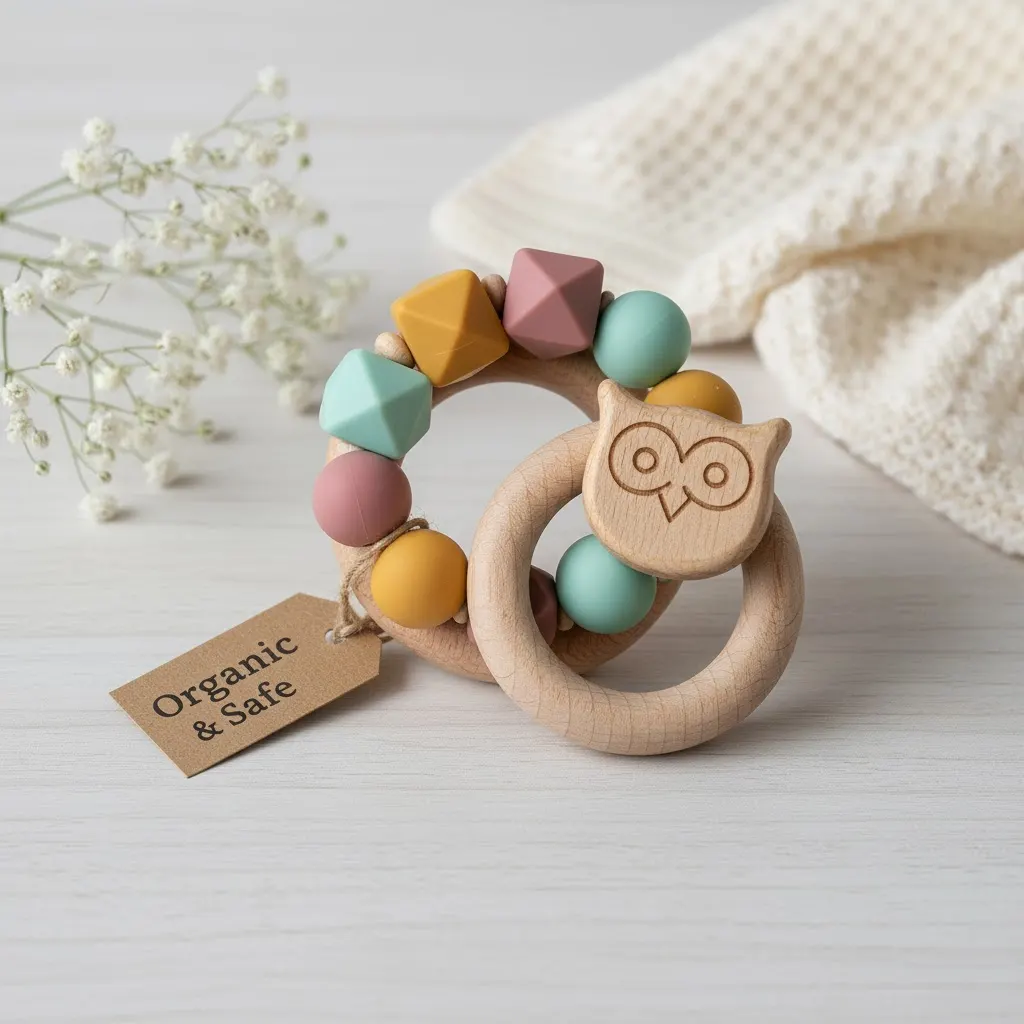
Consumers face a trade-off: **Wood** is eco-friendly (biodegradable) but harder to clean and can splinter. **Silicone** is hygienic (dishwasher-safe) and durable but is not biodegradable. The 2026 winning product is the "Hybrid"—a teether or pacifier clip that combines natural wood beads with food-grade silicone beads. This "best-of-both-worlds" approach perfectly captures the "Organic Modern" aesthetic and solves the consumer's biggest purchasing dilemma.
- For Corporate/Resellers: The "Hybrid" product is your most defensible premium item. It looks more expensive, aligns with "Japandi" and "Organic Modern" nursery trends, and has a powerful quality story.
- For Importers: This is a key product development opportunity. You must add hybrid wood/silicone products to your 2026 catalog to capture the high-end baby market.
B2B Risk Guide: What's Fading vs. What's Emerging
This market carries significant legal and marketing risks. Success depends on avoiding these critical pitfalls.
FADING: The "Eco-Friendly" Lie
- Reason: Silicone is NOT biodegradable and NOT recyclable in curbside programs. This is a "greenwashing" claim that creates massive brand risk as consumer awareness grows.
- Risk: Legal challenges and a complete loss of brand trust. This is a indefensible marketing position.
EMERGING: The "Honest Durability" Message
- Reason: The honest, defensible sustainability argument is durability and reusability. The message is: "This durable, non-toxic product *replaces* 10 single-use plastic items."
- Opportunity: Builds long-term trust by being honest. Positions the product as a "waste-reduction" tool, not a "green" one.
FADING: Ignoring CPSC Certification
- Reason: Buying CPSC-compliant beads does **NOT** make a compliant finished product. The "assembler" (your customer) is legally required to pay for 3rd-party lab testing on the *final* teether/clip.
- Risk: Systemic non-compliance. You and your customers are exposed to lawsuits, recalls, and platform bans (e.g., from Etsy/Amazon).
EMERGING: Proactive Compliance & Education
- Reason: The supplier who educates their customers on risk becomes the trusted partner. Provide component safety docs *and* CPSC testing resources.
- Opportunity: Become an authority. You are not just selling beads; you are selling peace of mind and protecting your clients' businesses. This builds immense loyalty.
Food-Grade Silicone Bead Formulations & Safety Specs
| Silicone Bead Formulation | Chemical Purity Benchmark | Tensile Tear & Thermal Resistance | Mandatory Safety Certifications |
|---|---|---|---|
| 100% Food-Grade Platinum Silicone | Zero BPA, BPS, Lead, Phthalates, Cadmium | Resists -40°C to +220°C (Dishwasher/Boiling Safe) | FDA 21 CFR 177.2600, LFGB (Germany), CPSIA |
| Solid Hexagon / Round Geometry | High-density solid compression mold | Cannot be crushed or cracked by infant bite force | EN 71-1 Mechanical & Physical Safety |
| Antibacterial Infused Silicone | Non-leaching antimicrobial ions | Inhibits 99% bacterial growth on teether surface | ISO 22196 Antimicrobial Efficacy Tested |
B2B Tiered Volume Pricing & Tooling Matrix
| Bead Style & Size (15mm) | 1,000 pcs (MOQ) | 10,000 pcs | 50,000 pcs | 200,000 pcs | Mold Fee |
|---|---|---|---|---|---|
| 15mm Round Food-Grade Silicone Bead | $0.06 – $0.08 | $0.038 – $0.048 | $0.024 – $0.030 | $0.016 – $0.020 | Free (Over 50+ Existing Molds) |
| 17mm Hexagon Multi-Faceted Bead | $0.08 – $0.10 | $0.048 – $0.058 | $0.030 – $0.038 | $0.020 – $0.025 | Free (Over 50+ Existing Molds) |
Looking for Factory-Direct Custom Promotional Merchandise & Gifts?
Source directly from China audited manufacturing facilities. Explore our catalogue of custom promotional merchandise wholesale with transparent tiered pricing starting at low MOQ (300 pcs), free pre-production digital proofs, and turnkey DDP door-to-door delivery worldwide.
Request Factory Quote & Free Sample →<div class="accordion">
<div class="accordion-item">
<div class="accordion-header">
<span>What is the CPSC vs. FDA "liability trap" for teethers?</span>
<span class="accordion-icon">+</span>
</div>
<div class="accordion-content">
<p>The <strong>CPSC</strong> (Consumer Product Safety Commission) regulates teethers as <strong>'toys'</strong> (if marketed to 'soothe'). The <strong>FDA</strong> (Food and Drug Administration) regulates them as <strong>'medical devices'</strong> (if marketed to 'ease pain'). Using the wrong phrase (e.g., "soothes teething pain") accidentally places your product under FDA jurisdiction, which has different, complex requirements.</p>
</div>
</div>
<div class="accordion-item">
<div class="accordion-header">
<span>What is "assembler liability" and a Children's Product Certificate (CPC)?</span>
<span class="accordion-icon">+</span>
</div>
<div class="accordion-content">
<p>Buying CPSC-compliant *components* (beads) does <strong>NOT</strong> make a compliant *finished product*. The "assembler" (the person tying the knots) must have the final product (e.g., the finished teether or pacifier clip) tested by a CPSC-accepted 3rd-party lab. Based on that test, the assembler must issue a <strong>Children's Product Certificate (CPC)</strong>. Many small sellers are unaware of this, putting them at significant legal risk.</p>
</div>
</div>
<div class="accordion-item">
<div class="accordion-header">
<span>Is silicone eco-friendly or biodegradable?</span>
<span class="accordion-icon">+</span>
</div>
<div class="accordion-content">
<p><strong>No.</strong> This is a common myth. Silicone is a polymer made from silica (sand), but it is <strong>not biodegradable</strong> and will persist in a landfill. It also cannot be recycled in standard curbside programs. The only honest, defensible "green" marketing angle is its <strong>durability</strong> and <strong>reusability</strong> as a replacement for single-use plastics.</p>
</div>
</div>
<div class="accordion-item">
<div class="accordion-header">
<span>Why are silicone bead prices so volatile?</span>
<span class="accordion-icon">+</span>
</div>
<div class="accordion-content">
<p>The craft/baby market is a tiny fraction of the global silicone industry. The real demand and price drivers are high-tech sectors, primarily <strong>Electric Vehicles (EVs)</strong>, <strong>medical devices</strong>, and <strong>electronics</strong>. A surge in EV battery production can directly increase the raw material cost for a small business selling silicone keychains.</p>
</div>
</div>
<div class="accordion-item">
<div class="accordion-header">
<span>What is a "focal bead" and why is it important?</span>
<span class="accordion-icon">+</span>
</div>
<div class="accordion-content">
<p>A standard round bead is a low-margin commodity. A <strong>"focal bead"</strong> is the differentiator—a larger, 3D-shaped or printed bead (e.g., a flower, animal, or character). This is where personalization and value are created. B2B success in 2026 is less about selling commodity beads and more about sourcing unique focal beads that cater to niche trends.</p>
</div>
</div>
<div class="accordion-item">
<div class="accordion-header">
<span>What is Liquid Silicone Rubber (LSR) and why does it matter?</span>
<span class="accordion-icon">+</span>
</div>
<div class="accordion-content">
<p><strong>LSR</strong> is a high-purity, platinum-cured silicone that is processed via injection molding. It's growing faster than older 'HTV' silicone. High-quality, food-grade silicone beads are made using LSR. This is the same material used in medical and automotive parts, which is why those industries control the price.</p>
</div>
</div>
<div class="accordion-item">
<div class="accordion-header">
<span>What is the best product strategy for the 2026 baby market?</span>
<span class="accordion-icon">+</span>
</div>
<div class="accordion-content">
<p>The winning strategy is the <strong>"Hybrid" product</strong>. This means combining <strong>natural wood beads</strong> (which appeal to the 'eco-friendly' and 'Organic Modern' aesthetic) with <strong>food-grade silicone beads</strong> (which provide 'hygiene' and 'sensory' benefits). This "best-of-both-worlds" approach solves the consumer's biggest purchasing trade-offs.</p>
</div>
</div>
<div class="accordion-item">
<div class="accordion-header">
<span>What is Ruixing Gifts' core competitive advantage as an overseas supply chain partner?</span>
<span class="accordion-icon">+</span>
</div>
<div class="accordion-content">
<p>We operate a <strong>hybrid direct factory infrastructure</strong> combining our own cut-and-sew production lines with 50+ audited partner mills across China. This gives enterprise clients direct-factory pricing, bilingual engineering support, independent AQL 2.5 QC inspection, and single-point category consolidation.</p>
</div>
</div>
<div class="accordion-item">
<div class="accordion-header">
<span>How do you handle multi-category supply chain consolidation?</span>
<span class="accordion-icon">+</span>
</div>
<div class="accordion-content">
<p>We consolidate multiple product lines (e.g. bags, drinkware, apparel, pins, packaging) into unified factory container shipments, managing all QA reports and export documentation under a single commercial invoice.</p>
</div>
</div>
<div class="accordion-item">
<div class="accordion-header">
<span>What are your standard commercial payment terms?</span>
<span class="accordion-icon">+</span>
</div>
<div class="accordion-content">
<p>Our standard wholesale payment terms are <strong>30% deposit upon PO placement and 70% balance payment following final QA inspection report release</strong> prior to shipping.</p>
</div>
</div>
<div class="accordion-item">
<div class="accordion-header">
<span>Can we execute a mutual Non-Disclosure Agreement (NDA) before sharing proprietary designs?</span>
<span class="accordion-icon">+</span>
</div>
<div class="accordion-content">
<p><strong>Yes, 100%.</strong> We routinely sign mutual NDAs with enterprise brand clients, ensuring complete confidentiality for proprietary product molds, artwork, and marketing concepts.</p>
</div>
</div>
<div class="accordion-item">
<div class="accordion-header">
<span>Do you offer turnkey Delivered Duty Paid (DDP) door shipping worldwide?</span>
<span class="accordion-icon">+</span>
</div>
<div class="accordion-content">
<p><strong>Yes.</strong> We manage full DDP ocean and air freight logistics with all destination customs clearance, port handling, and import tariffs fully paid to North America, Europe, Australia, and Asia.</p>
</div>
</div>
</div>