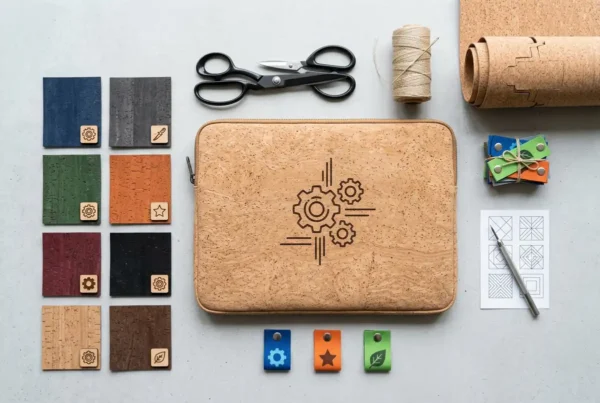
Guide to Cork Material Sustainability in Tech Accessories
In the modern corporate world, eco-conscious procurement has shifted from a secondary compliance checkbox to a core strategic priority. As brands actively seek to reduce single-use plastics and lower their carbon footprint, natural cork fabric has emerged as a premium alternative. But what exactly makes cork one of the most environmentally friendly materials on earth, and how does it protect delicate technology?
This comprehensive guide explores the unique lifecycle, harvesting science, and environmental impact of FSC-certified cork, demonstrating its values for corporate gifts and tech merchandise.
Key Insights
- Zero Logging Required: Cork oak trees are never felled; only the outer bark is harvested.
- Active Carbon Capture: Stripped cork oaks absorb up to 5 times more CO2 during bark regeneration.
- Naturally Durable: Water-resistant, shock-absorbing, and biodegradable.
Environmental Impact at a Glance
Key ecological statistics behind FSC-certified cork oak bark production.
Harvesting Cork vs. Traditional Forestry
An overview of how cork stripping compares to conventional wood logging in ecological conservation.
| Property | Sustainable Cork Oak Stripping | Traditional Hardwood Logging |
|---|---|---|
| Tree Survival | 100% survives. The bark is stripped manually, leaving the tree standing and thriving. | 0% survives. The entire tree must be cut down and processed. |
| Lifecycle Yield | Up to 15-18 harvests over a single tree's active lifetime. | Single yield. Requires replanting and decades of waiting for regrowth. |
| Biodiversity Protection | Preserves the Mediterranean oak forests, supporting endangered regional wildlife. | Logging operations often disrupt forest ecosystems and local wildlife habitats. |
| Carbon Sinking | Increases carbon dioxide absorption dynamically as bark regrows. | Stops carbon absorption immediately until a replacement tree matures. |
The Science of Cork Sustainability
1. An Ancient, Handcrafted Art
Stripping cork oak bark is a highly specialized craft that has remained unchanged for centuries. Skilled workers use sharp hand axes to make precise cuts in the bark, peeling away large sections without touching the underlying wood tissue.
- Harvesting only occurs during summer when the bark easily detaches from the trunk.
- No heavy machinery is used, preventing soil compaction and protecting root systems.
- Workers mark each tree with a painted white number showing the harvest year, tracking the 9-year cycle.
2. Naturally Protective Cellular Structure
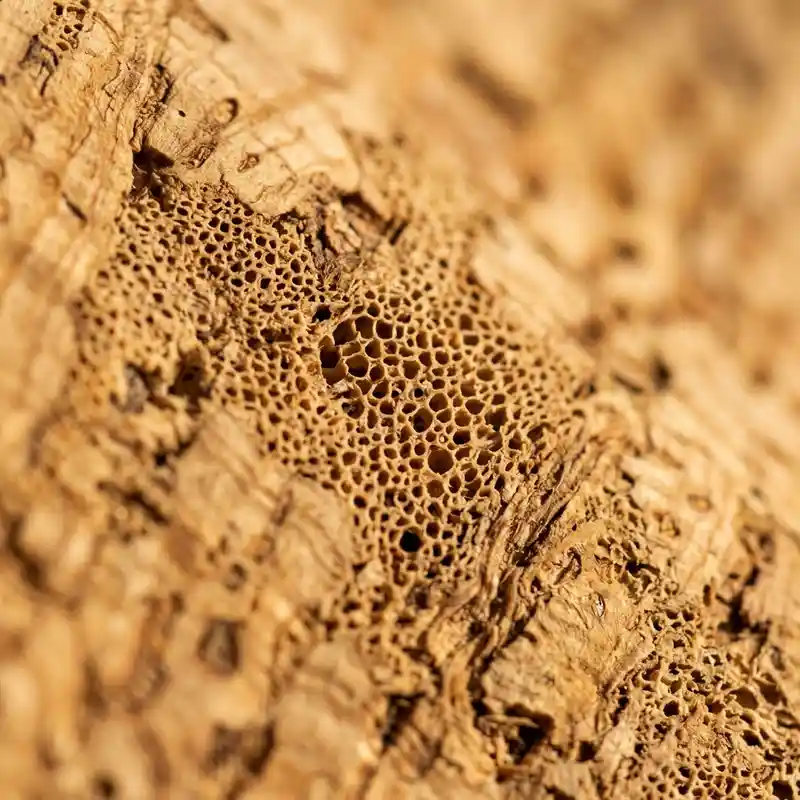
The ecological success of cork is mirrored by its functional properties. Cork fabric is comprised of tiny cellular chambers containing air, creating a natural thermal insulator and shock absorber.
- Shockproof: The air-filled cellular honeycomb pockets compress under load, absorbing drop energy.
- Hydrophobic: Cork contains natural suberin, a waxy organic compound that repels water natively.
- Hypoallergenic: Does not absorb dust, dirt, or bacteria, ensuring a clean daily workspace.
Cork Sustainability FAQ
Yes, natural cork bark is 100% organic, biodegradable, and compostable. If discarded, it will break down in soil over time without releasing any microplastics or chemical toxins, unlike synthetic petroleum-based materials.
Not at all. Cork is harvested by stripping only the outer layer of bark. The inner bark remains fully protected, allowing the tree to live and continue growing. It is one of the very few wood products that do not require logging or tree felling.
Cork oak bark can be stripped once every 9 to 10 years. This timeframe is strictly regulated by environmental laws to ensure the bark has fully regenerated and grown back to a healthy thickness before the next stripping cycle.
During the bark regeneration process, a stripped cork oak tree absorbs up to 3 to 5 times more carbon dioxide from the atmosphere compared to an unstripped tree of equivalent size. This turns cork oak woodlands into highly active carbon sinks.
Our premium cork is sourced from responsibly managed forests in the Mediterranean region, primarily Portugal. All forests operate under strict FSC-certified forestry guidelines to ensure ecological balance.
Yes, harvesting is strictly monitored by forestry authorities. It is illegal to cut down or strip a cork oak tree without government inspection and official stamping, ensuring the preservation of the local biodiversity.
Yes, cork contains suberin and is natively resistant to fire and heat. It does not catch fire easily and, when exposed to high temperature, burns slowly without releasing hazardous chemicals.
To turn cork into a flexible fabric, thin cork shavings are laminated to a backing material. We use water-based, solvent-free adhesives that meet strict REACH and SGS environmental standards.
No. Cork has natural anti-microbial and anti-static properties that resist the buildup of mold, mildew, and dust mites. This makes it a clean and low-maintenance choice for office and tech accessories.
Yes, the cork component is organic and can be recycled into granulated cork products like insulation board or footwear. However, because it contains fabric lining, components must be separated for proper recycling streams.
Our cork fabrics carry FSC (Forest Stewardship Council) certification for sustainable forestry, OEKO-TEX Standard 100 for non-toxic fibers, and comply with EU REACH requirements.
Cork combines striking organic beauty with solid carbon-neutral credentials. It is a highly visible statement of a company's commitment to plastic reduction and sustainability, offering a far better corporate narrative.
Ready to Launch Your Sustainable Merchandise?
Bring eco-friendly organic elegance to your company office gear. Sourced from FSC certified cork bark and custom engraved with precision.
Explore Cork Tech Accessories
See how natural cork is transforming modern office gear and laptop protection.
Start Your Bulk Custom Project
Looking to order customized cork laptop sleeves? Get professional service from design dielines to door-to-door delivery.
- Free Layout Digital Mockup
- FSC-Certified Cork Bark Fabric
- Low MOQ & Door-to-Door DDP Shipping