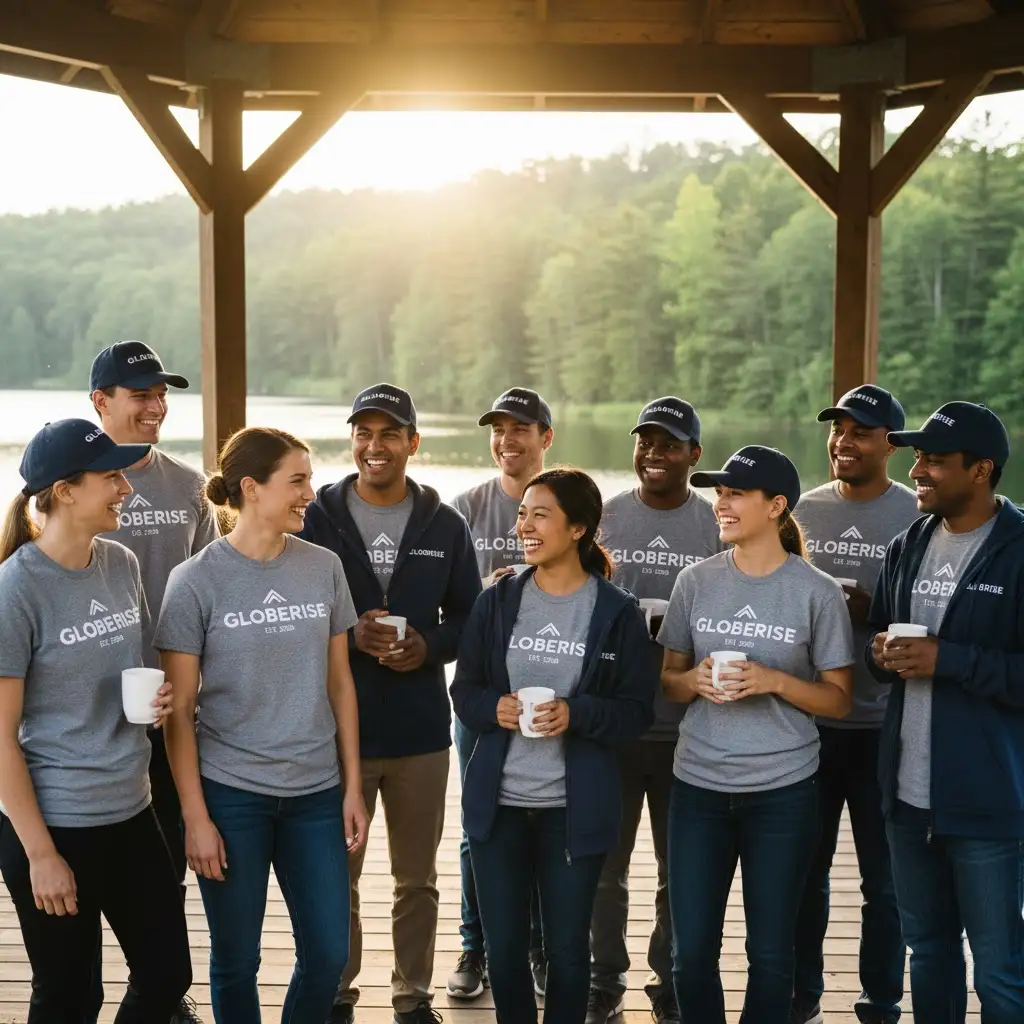
Corporate apparel is undergoing its most profound transformation in decades. As global enterprises plan their 2027 workforce outfitting budgets, the demand for thin polyester uniforms and oversized billboard logos has evaporated. Strategic buyers now insist on workleisure silhouettes crafted from heavy organic textiles, fluorine-free technical weatherproofing, and discreet micro-branding that employees eagerly wear off-duty.
Executive Summary: 2027 Apparel Sourcing Benchmarks
- PFAS-Free Weatherproofing: Fluorine-free C0 durable water repellent (DWR) finishes replace legacy fluorochemical coatings to meet global 2027 chemical bans.
- Heavyweight Workleisure Knits: 380–420 GSM combed GOTS organic cotton and brushed French terry deliver substantial drape and premium thermal insulation.
- Pre-Shrunk Dimensional Control: Stenter heat-setting and zero-twist compact spinning constrain commercial laundering shrinkage to under 3.0%.
- Tone-on-Tone Micro-Branding: Matte high-density silicone transfers and miniature direct embroidery replace loud, glossy screen prints.
- Circular Textile Tracing: Woven neck labels incorporate verifiable QR codes documenting GRS recycled fiber origin and carbon footprints.
1. Chemical Compliance: Transitioning to PFAS-Free Hydrophobic Membranes
For over twenty years, commercial outwear relied on long-chain per- and polyfluoroalkyl substances (PFAS) to repel precipitation and industrial grime. However, sweeping legislative bans taking full effect across the European Union and multiple US states by 2027 have rendered PFAS-treated garments illegal for commercial sale.
Procurement directors must verify that their manufacturing partners operate certified fluorine-free finishing lines.
Modern weatherproof jackets and corporate softshell vests now utilize bio-based dendrimer technology, known commercially as C0 DWR or BIONIC-FINISH® ECO.
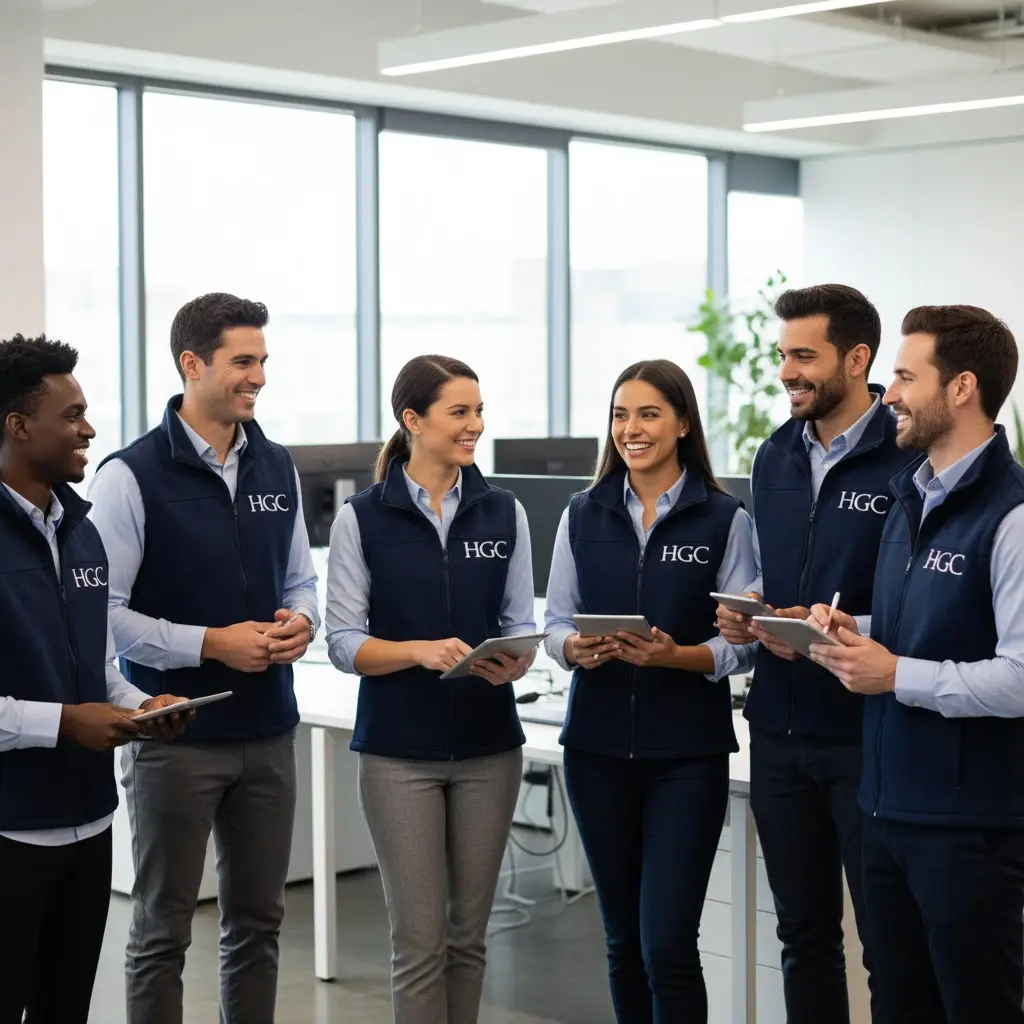
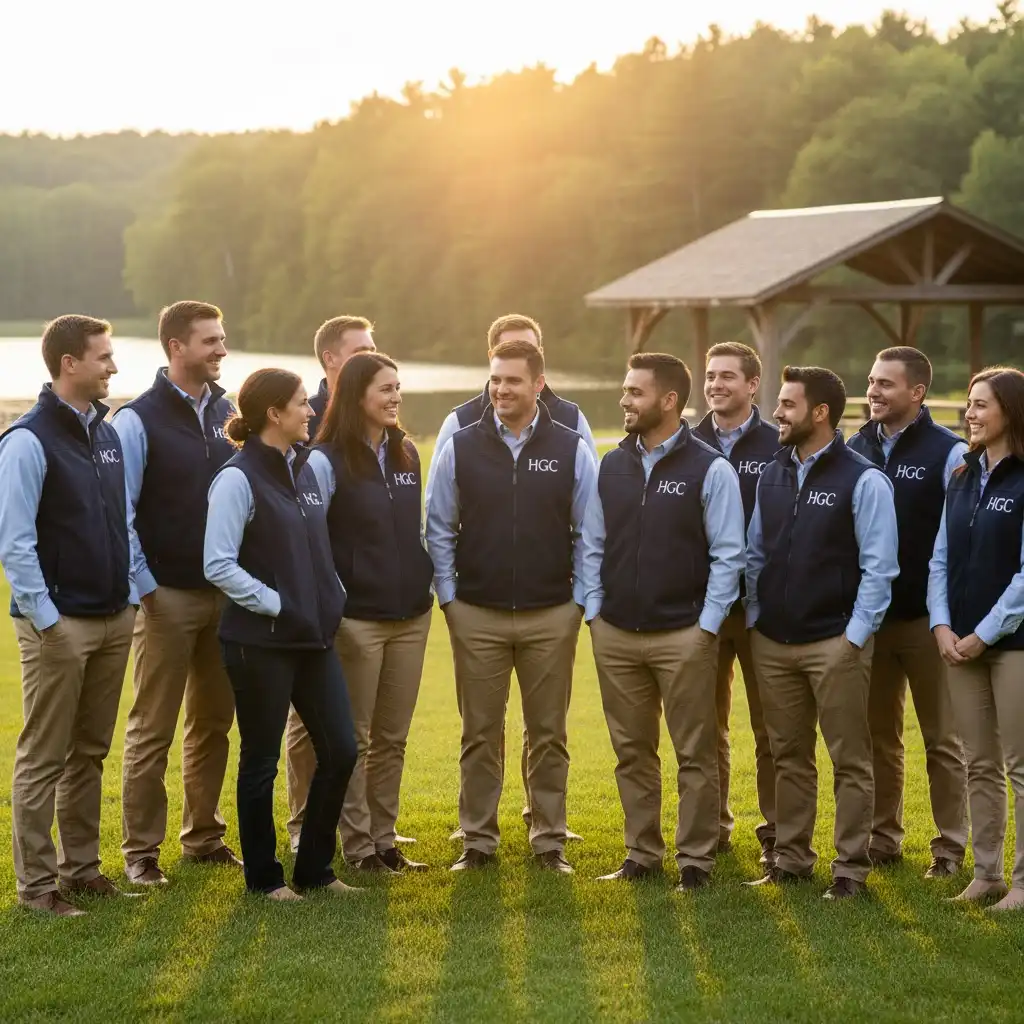
Technical fleece vests combine PFAS-free water repellency with refined office-ready styling for hybrid professionals.
Instead of relying on halogen bonds, C0 chemistry mimics the natural water-shedding microstructure of plant foliage. Hyper-branched polymers crystallize on individual yarn surfaces, repelling surface droplets while allowing sweat vapor to pass through the textile pores.
| Textile Technology | Hydrophobic Agent | Hydrostatic Water Column | Breathability (MVTR) | Environmental Status |
|---|---|---|---|---|
| C0 Bio-Based DWR | Fluorine-free dendrimers | 8,000 – 10,000 mm H₂O | 6,000 g/m²/24h | 100% Compliant (EU ESPR / US EPA) |
| TPU Hydrophilic Membrane | Recycled thermoplastic PU | 10,000 mm H₂O | 5,000 g/m²/24h | Solvent-free, fully recyclable |
| Legacy C6 Fluorocarbon | Short-chain fluoropolymers | 12,000 mm H₂O | 5,500 g/m²/24h | Restricted under 2026/2027 bans |
| Uncoated Hydrophobic Knit | Siliconized poly yarns | 1,500 mm H₂O | 12,000 g/m²/24h | Chemical-free light shower protection |
2. Workleisure Architecture: Heavyweight Combed Cotton & Anti-Pill Fleece
The standard promotional hoodie of the past decade weighed 240–280 GSM, often blended with cheap recycled polyester that developed rough surface pills after three washes. Modern hybrid professionals reject low-density garments.
The 2027 benchmark centers on luxury retail grade 380 to 450 GSM heavyweight fleece and loopback French terry.
Constructing durable heavyweight textiles requires strict fiber engineering:
- Long-Staple Combed GOTS Cotton: Combing removes short fibers below 28mm, reducing yarn hairiness and creating an ultra-dense face for precise embroidery.
- Zero-Twist Compact Spinning: Yarns undergo pneumatic compacting that minimizes mechanical friction during washing, securing ISO 12945-2 Grade 4.5 anti-pill ratings.
- Stenter Heat-Setting & Compacting: Greige knitted fabric passes through an 8-chamber stenter frame at 180°C to lock dimensional knit geometry, keeping shrinkage below 3%.
- Brushed Recycled Poly Fillers: Inner fleece layers incorporate 15% GRS certified recycled polyester filament to preserve loft and warmth without adding deadweight.
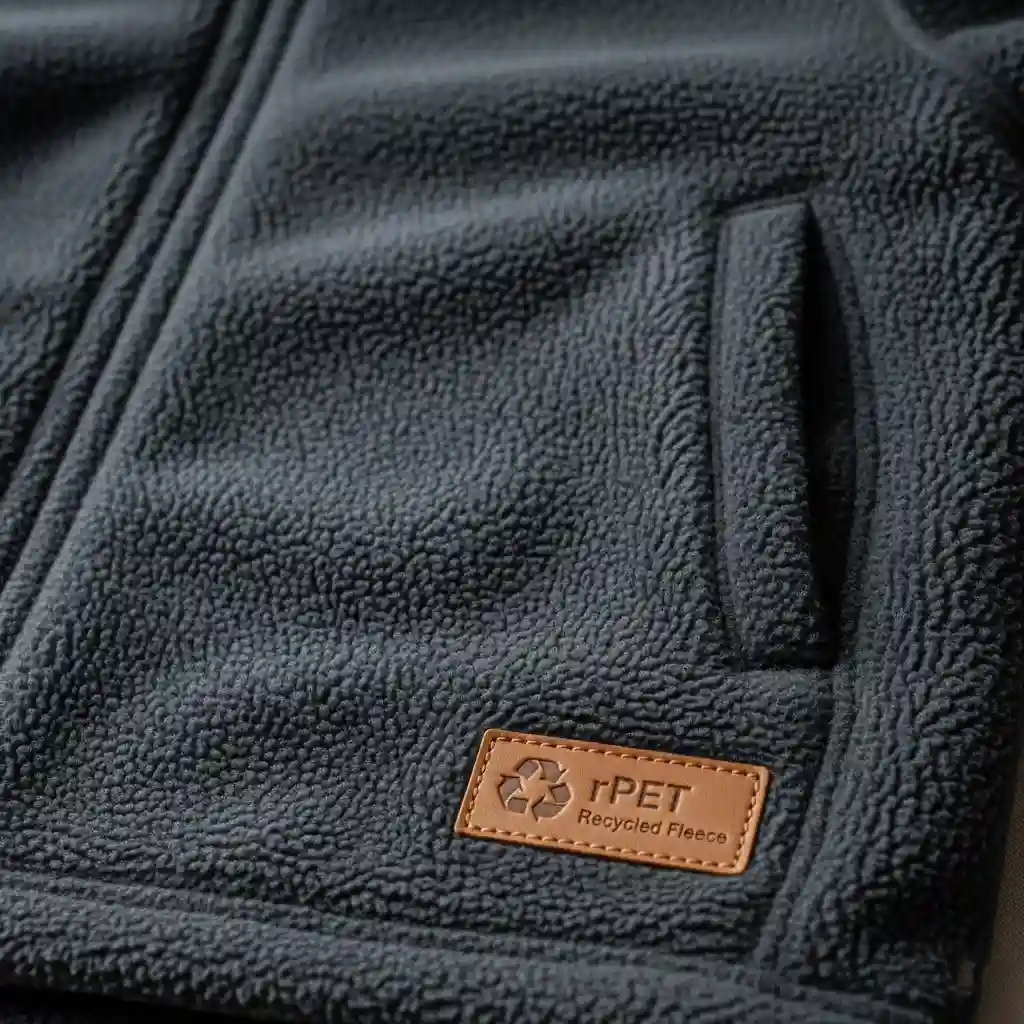
High-gauge circular knitting machines create an ultra-smooth outer surface optimized for fine-detail logo decoration.
3. Quiet Luxury: Tone-on-Tone Micro-Branding & Hardware Detailing
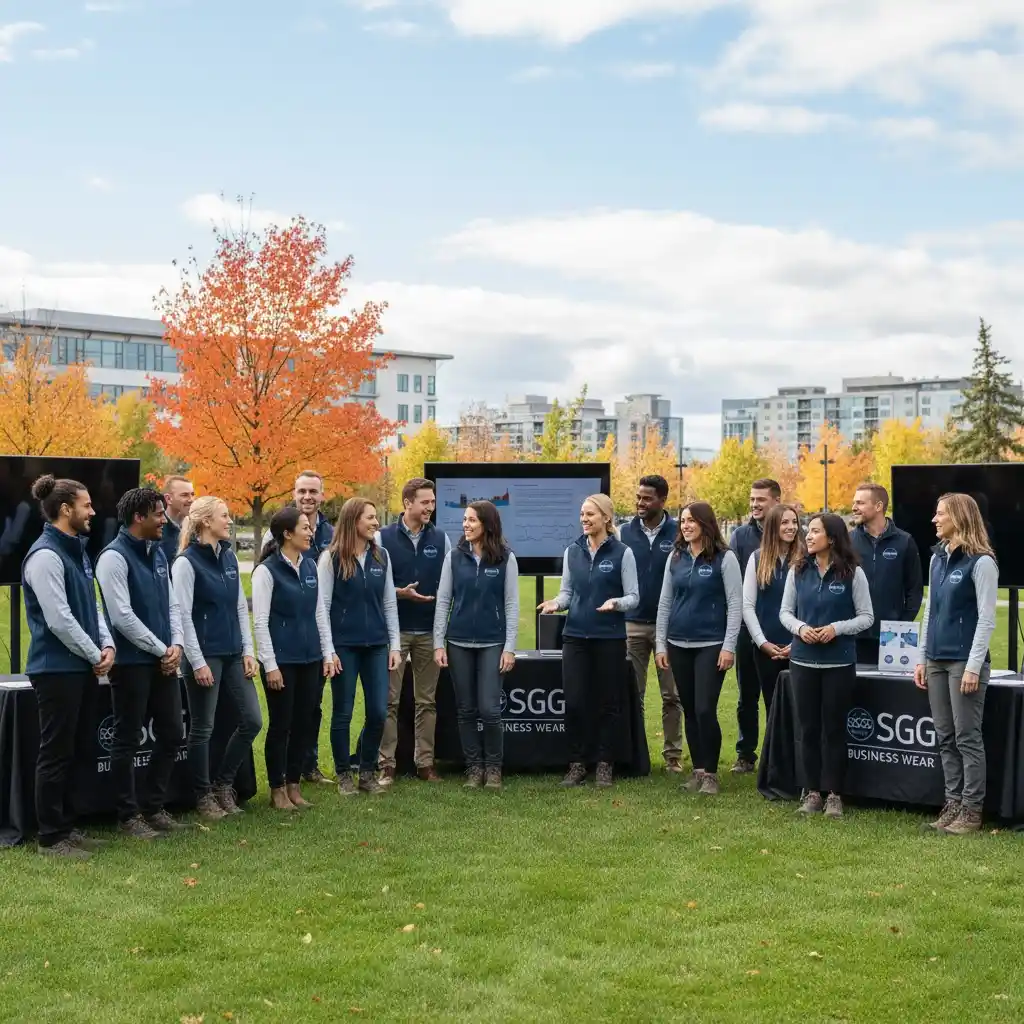
Corporate merchandise programs no longer succeed by treating employees as walking corporate billboards. Overly large chest graphics correlate directly with low garment wear frequency.
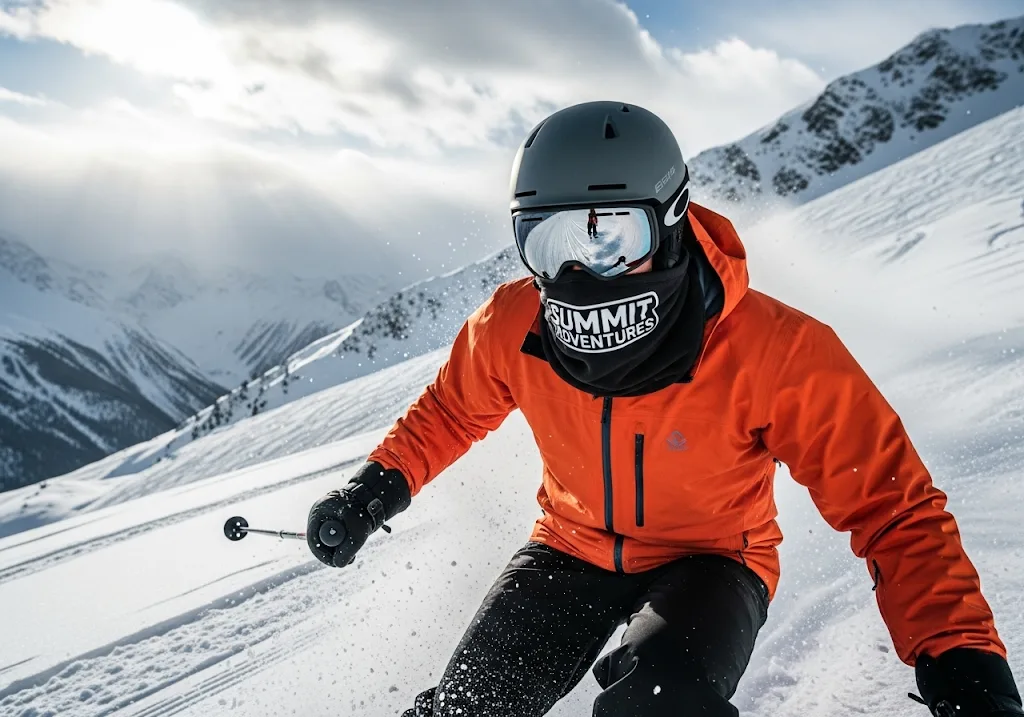
The 2027 aesthetic follows quiet luxury: understated, tonal, and tactile branding that elevates the garment into high-end casual wear.
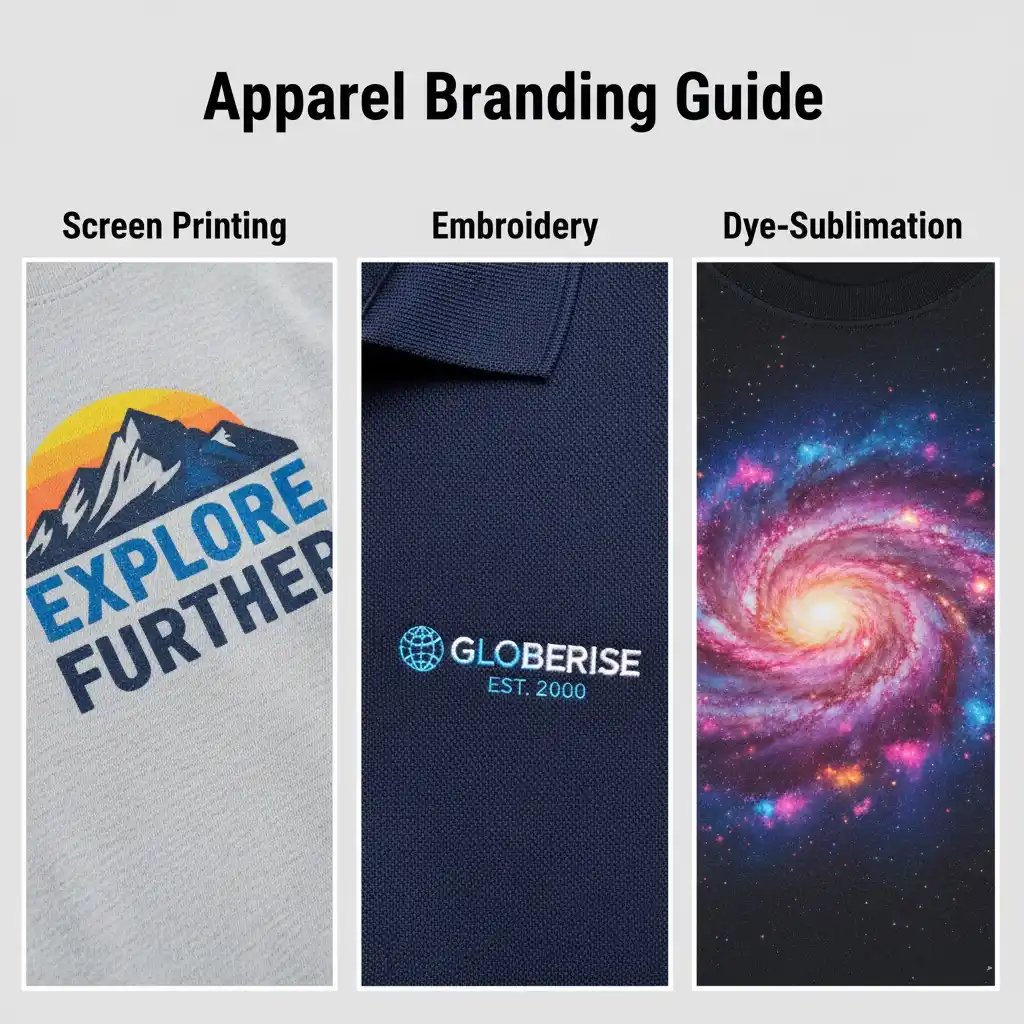
Refined decoration options balance subtle brand visibility with premium corporate executive presentation.
Our production floor specializes in three subtle execution styles:
- Matte High-Density 3D Silicone Transfers: Heat-applied liquid silicone creates sharp, raised typography (0.8mm relief) with an anti-reflective matte velvet feel.
- Tone-on-Tone Tajima Direct Embroidery: Using Rayon thread matched to within one half-shade of the underlying fabric creates sophisticated, light-catching textures.
- Custom Laser-Etched Hardware: Branded gunmetal zipper pulls, matte black aglets, and lower-hem metal clip labels deliver subtle executive polish.
4. Sizing Architecture: Western Retail Fits & Carton Allocation
A frequent error in global apparel procurement is relying on generic Asian domestic sizing charts. When garments arrive one to two sizes too small, return rates soar and employee goodwill evaporates.
We build our production patterns around standardized Western (US/EU) retail size blocks with relaxed contemporary drops:
| Size Block (US/EU) | 1/2 Chest Width (cm) | Body Length (cm) | Sleeve Length (cm) | Recommended Carton Mix |
|---|---|---|---|---|
| Small (S) | 53.0 ± 1.0 | 69.0 ± 1.0 | 63.5 ± 1.0 | 10% of total order |
| Medium (M) | 56.0 ± 1.0 | 72.0 ± 1.0 | 65.0 ± 1.0 | 25% of total order |
| Large (L) | 59.0 ± 1.0 | 75.0 ± 1.0 | 66.5 ± 1.0 | 35% of total order |
| Extra Large (XL) | 63.0 ± 1.0 | 78.0 ± 1.0 | 68.0 ± 1.0 | 20% of total order |
| Double Extra Large (2XL) | 67.0 ± 1.0 | 80.0 ± 1.0 | 69.0 ± 1.0 | 10% of total order |
5. Factory Wholesale Economics & Tiered Price Curve
Knitted apparel manufacturing benefits from significant economies of scale once fabric dye lots reach standard vat capacities (typically 300kg per custom dye batch).
The matrix below outlines direct FOB manufacturing pricing for a custom 400 GSM heavyweight organic cotton hoodie featuring high-density silicone micro-branding and custom woven neck labels:
| Production Tier | Unit Cost (FOB Shanghai) | Screen / Tooling Setup | Production Turnaround | Optimal Freight Method |
|---|---|---|---|---|
| 500 pcs (Factory MOQ) | $14.80 – $16.20 | $150 (Silicone mold plate) | 16–18 Working Days | Air Express or Fast Boat DDP |
| 1,000 pcs (Enterprise Run) | $12.50 – $13.60 | Waived | 18–22 Working Days | Fast Sea DDP (18–22 Days) |
| 5,000 pcs (Multi-Office Rollout) | $9.85 – $10.90 | Waived + Custom Colorway Dye | 25–30 Working Days | Standard Ocean FCL/LCL |
| 20,000+ pcs (Global Program) | $7.95 – $8.80 | Waived + Custom Zipper Hardware | 35–42 Working Days | Direct Ocean Container Forwarding |
Need Technical Feasibility Review & Tiered Factory Pricing?
Submit your vector artwork and target volume to receive a comprehensive engineering feasibility assessment, formal tiered BOM pricing, and DDP freight breakdown within 24 hours. Custom pre-production prototype sample fees are 100% refundable upon mass production order.
Request Formal Factory Quote & Spec Sheet →Frequently Asked Questions
1. What environmental and textile safety certifications back your corporate apparel?
Our knitting mills and dye houses maintain OEKO-TEX Standard 100 (Class I for direct skin contact), Global Organic Textile Standard (GOTS) for organic cotton fibers, and Global Recycled Standard (GRS) certification for recycled polyester fleeces. Formal Transaction Certificates (TC) verifying raw material chain of custody are issued with every bulk shipment.
2. What is the baseline minimum order quantity (MOQ) for custom-dyed apparel?
For garments utilizing our curated in-stock fabric colors (black, heather grey, navy, dark olive, off-white), our baseline MOQ is 500 units, which can be split across standard sizing (S through 2XL). For bespoke Pantone colorway lab dips, the minimum dye lot is 1,000 units to ensure consistent vat color penetration.
3. What is your pre-production physical sampling policy and timeline?
Custom pre-production prototype samples with customized embroidery, silicone branding, and fitted neck labels take 5 to 7 working days. We charge a nominal setup fee ($100 to $180 depending on branding complexity). This sample fee is 100% credited and refunded against your invoice balance when placing the full bulk production run.
4. How do you prevent shrinkage and color fading over multiple washes?
All fabrics undergo continuous stenter pre-shrinkage and compacting before cutting, locking shrinkage to under 3.0% under standard ISO 6330 laundering at 40°C. We use reactive vat dyes that achieve Grade 4.5 color fastness to washing (ISO 105-C06) and Grade 4 dry/wet crocking resistance.
5. Can we request individual polybag packing with custom barcode labels?
Yes. Each garment is neatly steam-ironed, folded, and packaged in 100% biodegradable cornstarch (PLA) bags or recycled GRS polybags. Every bag features a printed barcode label specifying SKU number, colorway, and size to facilitate rapid warehouse distribution at your facilities.
6. How does your factory handle textile quality assurance before shipment?
We execute strict four-point textile inspections during fabric knitting and follow ISO 2859-1 (AQL 2.5 Major / 4.0 Minor) during cut, make, and trim stages. Every single finished garment passes through an automated 0.8mm metal/needle detection tunnel before packaging to prevent needle fragments.
7. What are the global shipping lead times and DDP freight handling?
We manage complete Delivered Duty Paid (DDP) logistics. Ocean freight delivers to continental US and European addresses within 22 to 32 calendar days. For expedited project rollouts, split shipments are available: an initial air courier shipment (3–5 days) for executive launch events followed by ocean containers for bulk warehouse replenishment.